
A comment on my last post asked if I could elaborate on how the industry has changed since the writing of this book.
The first instance would be the rise and fall of different airlines.
Skyservice and Zoom have disappeared. Sunwing has expanded significantly. Jazz is no longer the exclusive regional airline service provider for Air Canada as SkyRegional also now flies Air Canada routes.
WestJet and Porter have expanded significantly. WestJet has just recently launched WestJet Encore.
The hiring requirements and statistics have changed for most airlines as well. For example, in the book I mention that Air Canada was hesitant to hire from Jazz - I no longer think that this is the case. Also, with WestJet's expansion, they have recently moved to a 3 pilot base system - Vancouver, Calgary and Toronto.
The next instance would be the various aviation programs out there. There have been more university aviation programs developed since I wrote the book. The full effectiveness of these programs remains to be seen. I think it is great that schools are developing programs where future pilots can get their flight training and a degree. However, the extremely high cost for some of these programs may make it very challenging to get a first job and be able to afford the necessities of life.
I still believe that there is no "Best Aviation Program" in Canada. There are paths that are right for some people, but not for others. But, I'm no longer in a position to be up to date on the requirements for each program and their individual pros and cons. I also know that at various times colleges have had programs with Jazz or other regional airlines for a position for a select group of students after graduation. I'm not sure which of these programs still exist.
Air Georgian in Toronto has also started an Cadet program. This is something that is seen more in European or Asian airlines. It has just started. It's expensive, but the 'guarantee' of a job at the end on a Beech 1900D is an interesting idea. On the one hand, I would have loved to have moved directly to a Beech 1900D right after college. On the other hand, the skills you develop while flying up north are something that you would not get by moving to a commuter airline environment directly after your flight training.
I still think that being a pilot can be a very good job, but it is necessary for people to know what they are getting into. As someone who no longer flies for a living, it's quite interesting to see what the life of my friends and former colleagues are like. In some senses, I'm envious - they get to fly, they get to travel, they have different days off, they have travel benefits etc. On the other hand, they are away from home more often, they are forced to move due to seniority, they miss important dates (birthdays, holidays, child's first steps), they don't have a regular sleep cycle and they have the difficult decision of trying to determine if they should take a pay cut to move to a job at a larger airline.
The general topics outlined in the book are still very relevant in determining if someone should be a pilot, how they should go about doing so and what their career goals are. Some of the specifics have changed.
Saturday, August 17, 2013


Wednesday, August 7, 2013
Book and Blog Status
As can probably be seen by the date of blog entries, I haven't been focusing too much on this blog. My full time job as a lawyer keeps me extremely busy.
The book itself is now almost 6 years old. The aviation industry has changed significantly in the last 6 years. Unfortunately, there are a few things in the book that are now out of date. I was looking at doing a second edition, but with my current time commitments, I do not see that happening in the near future. Some of the specific hiring information at different airlines is out of date - in fact, a number of the airlines are now bankrupt!
All that being said, I do think the book still serves its primary purpose of providing the important thoughts and considerations as to whether someone wants to be a pilot. There have been a number of reviews of the book on amazon.ca (Thanks!). One of the most recent one was that the book saved the reviewer $80,000 - as after reading the book, and consulting with his family, he decided being a pilot was not for him.
Being a pilot can be a great job. But it's not for everyone. The book gets you to really think about the road that lies ahead. If your response is "Sounds great, I'm up for the challenge!", then I think you'll really enjoy a career as a pilot.
Also, deciding to become a pilot and the routes to take can be difficult, personal decisions. The book does a good job of outlining the different pros and cons of taking a university / college program, or a traditional flight school. Be sure to check the internet for the most recent programs and program requirements. Unfortunately, with practicing law full time, I have not been able to keep track of all the program requirements and some of the new programs.
All that being said, I do try my best to answer individual questions sent to my piloteh gmail account. That's the only media where I'm able to answer direct questions. I do my best to provide through answers to well thought out questions.
I only ask that questions be specific and related to Canadian Aviation. If a question is "tell me all I need to know to become a pilot" - My answer would be to start by heading to your local library (or ordering off of amazon or chapters if you're so inclined) and reading the book. If there are additional questions afterwards, I am happy to answer.
Fly Safe!
The book itself is now almost 6 years old. The aviation industry has changed significantly in the last 6 years. Unfortunately, there are a few things in the book that are now out of date. I was looking at doing a second edition, but with my current time commitments, I do not see that happening in the near future. Some of the specific hiring information at different airlines is out of date - in fact, a number of the airlines are now bankrupt!
All that being said, I do think the book still serves its primary purpose of providing the important thoughts and considerations as to whether someone wants to be a pilot. There have been a number of reviews of the book on amazon.ca (Thanks!). One of the most recent one was that the book saved the reviewer $80,000 - as after reading the book, and consulting with his family, he decided being a pilot was not for him.
Being a pilot can be a great job. But it's not for everyone. The book gets you to really think about the road that lies ahead. If your response is "Sounds great, I'm up for the challenge!", then I think you'll really enjoy a career as a pilot.
Also, deciding to become a pilot and the routes to take can be difficult, personal decisions. The book does a good job of outlining the different pros and cons of taking a university / college program, or a traditional flight school. Be sure to check the internet for the most recent programs and program requirements. Unfortunately, with practicing law full time, I have not been able to keep track of all the program requirements and some of the new programs.
All that being said, I do try my best to answer individual questions sent to my piloteh gmail account. That's the only media where I'm able to answer direct questions. I do my best to provide through answers to well thought out questions.
I only ask that questions be specific and related to Canadian Aviation. If a question is "tell me all I need to know to become a pilot" - My answer would be to start by heading to your local library (or ordering off of amazon or chapters if you're so inclined) and reading the book. If there are additional questions afterwards, I am happy to answer.
Fly Safe!
Saturday, February 12, 2011
How to be a pilot in the UK (BBC version)
Apparently there is a new show in the UK on the BBC called "Come Fly with Me". The show's website has an excellent guide on how to become a pilot in the UK.
Take a look:
How do you become a Pilot: A Guide by Tommy
Take a look:
How do you become a Pilot: A Guide by Tommy
Tuesday, November 2, 2010
Penny For Your Thoughts (Ok, I Don't Really Have a Penny)
So, You Want to be a Pilot, Eh? has now been out for three years. The response and interest in the book has been great and I am glad I wrote it. I do think, however, that it may be time to think about updating a few things in it, so, I've been contemplating writing a second edition.
It'll probably be a little before a new edition is out and I'm just in the brainstorming phase right now, however, I'm interested to hear your thoughts on the book.
For those of you that have read it:
What did you like?
What did you dislike?
Was there anything that you felt was missing?
Was there anything that you wanted more of?
Were there any topics that I spent too much / not enough time on?
For those of you who haven't read the book but are looking to become a pilot in Canada, are there specific things that you're looking for in a book?
Please send these suggestions or other thoughts about the book to my e-mail: piloteh@gmail.com
Thanks!
It'll probably be a little before a new edition is out and I'm just in the brainstorming phase right now, however, I'm interested to hear your thoughts on the book.
For those of you that have read it:
What did you like?
What did you dislike?
Was there anything that you felt was missing?
Was there anything that you wanted more of?
Were there any topics that I spent too much / not enough time on?
For those of you who haven't read the book but are looking to become a pilot in Canada, are there specific things that you're looking for in a book?
Please send these suggestions or other thoughts about the book to my e-mail: piloteh@gmail.com
Thanks!
Sunday, October 17, 2010
Moves and New Adventures
There have been a lot of changes in the past year. I finished articling, got called to the Nova Scotia Bar, moved to Vancouver, BC, got called to the British Columbia Bar and am now practising as an aviation lawyer in Vancouver.
The road to becoming a lawyer is challeging, and like flying, you learn something new everyday, though with new clients, different files and new events, everyday can seem like a check ride in the sim!
Moving from one coast to the other has not been without its challenges. Canada is a BIG country. I wouldn't say we were rushed on the drive as we did get to stop in Ontario for a few days to see relatives, but we didn't have the luxury of turning the drive into a 2 to 4 week sightseeing trip. It was amazing to see the changes in the country. We drove through a heat wave in New Brunswick and Quebec (with a car whose air conditioning wasn't working quite right); drove again through the expanse that is Northern Ontario; saw Manitoba for the first time since moving away from Thompson almost 6 years ago; stopped in Rouleau, Saskatchewan (a.k.a Dog River) to see the set of Corner Gas; drove through some massive thunderstorms in Southern Saskatchewan and Alberta; stopped in Banff National Park and visited Morraine Lake and Lake Louise; drove through the mountains of BC (and that's when the brakes started to squeal) and arrived in Vancouver on a glorious sunny day.
 I will miss our view in Halifax. This is the U.S.S. Wasp entering port for the Canadian Naval Centennial Fleet Review
 Leaving Nova Scotia and entering New Brunswick
 Pumping Gas in Dog River
 Morraine Lake, Banff National Park, Alberta
 Vancouver from Stanley Park
I'm loving Vancouver so far. When I lived up north, a number of the other pilots I lived with were from Vancouver, or Vantopia as they called it. It is a gorgeous city.
I'm also quite excited about the new job. It is primarily actin for airlines or their insurers for various types of litigation issues. I've been extremely lucky to be able to combine aviation and law. The work is extremely interesting and having an aviation background is very helpful.
The road to becoming a lawyer is challeging, and like flying, you learn something new everyday, though with new clients, different files and new events, everyday can seem like a check ride in the sim!
Moving from one coast to the other has not been without its challenges. Canada is a BIG country. I wouldn't say we were rushed on the drive as we did get to stop in Ontario for a few days to see relatives, but we didn't have the luxury of turning the drive into a 2 to 4 week sightseeing trip. It was amazing to see the changes in the country. We drove through a heat wave in New Brunswick and Quebec (with a car whose air conditioning wasn't working quite right); drove again through the expanse that is Northern Ontario; saw Manitoba for the first time since moving away from Thompson almost 6 years ago; stopped in Rouleau, Saskatchewan (a.k.a Dog River) to see the set of Corner Gas; drove through some massive thunderstorms in Southern Saskatchewan and Alberta; stopped in Banff National Park and visited Morraine Lake and Lake Louise; drove through the mountains of BC (and that's when the brakes started to squeal) and arrived in Vancouver on a glorious sunny day.
 I will miss our view in Halifax. This is the U.S.S. Wasp entering port for the Canadian Naval Centennial Fleet Review
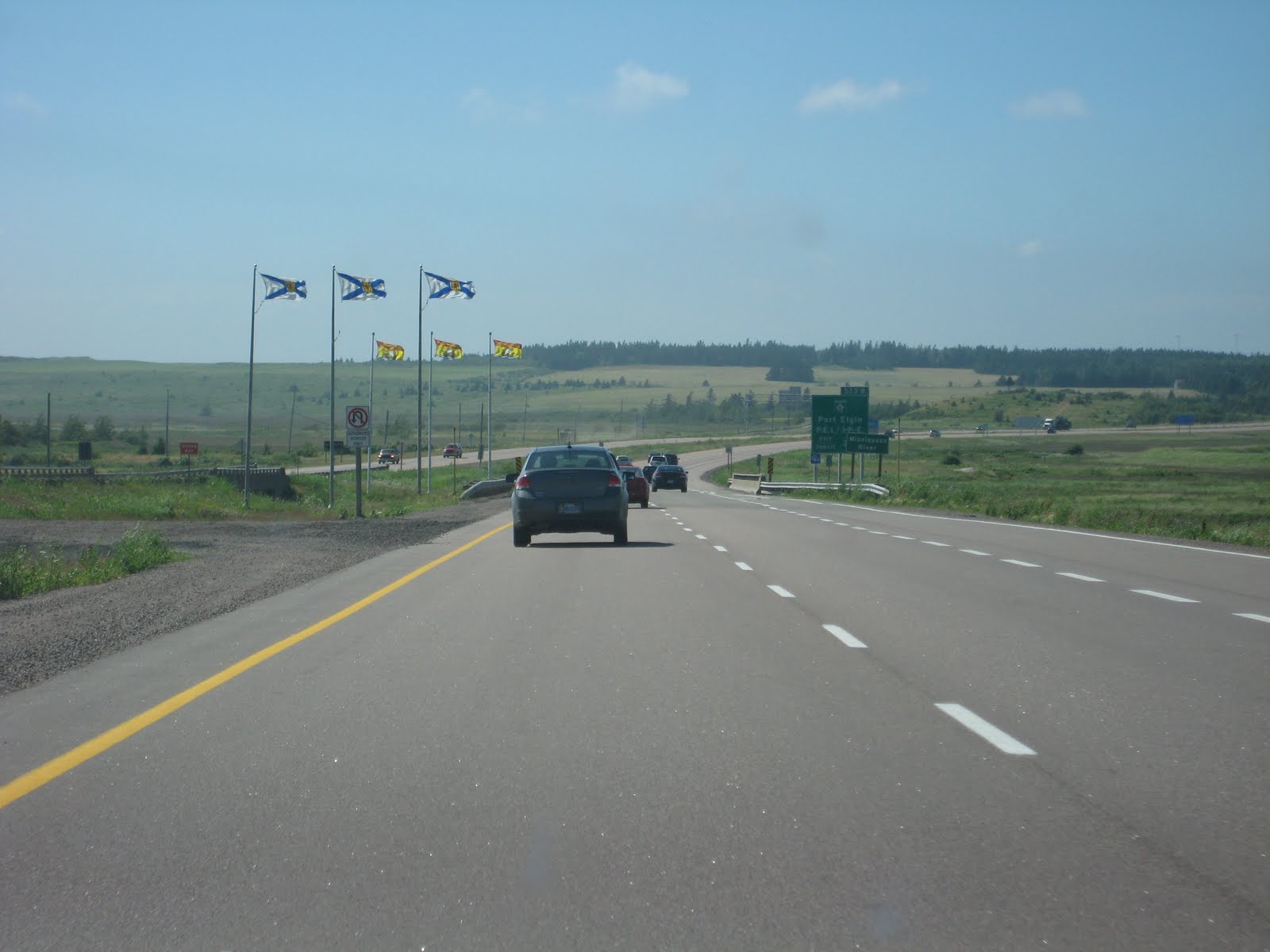 Leaving Nova Scotia and entering New Brunswick
 Pumping Gas in Dog River
 Morraine Lake, Banff National Park, Alberta
 Vancouver from Stanley Park
I'm loving Vancouver so far. When I lived up north, a number of the other pilots I lived with were from Vancouver, or Vantopia as they called it. It is a gorgeous city.
I'm also quite excited about the new job. It is primarily actin for airlines or their insurers for various types of litigation issues. I've been extremely lucky to be able to combine aviation and law. The work is extremely interesting and having an aviation background is very helpful.
Tuesday, November 24, 2009
Fly At Your Own Risk - Article from The Walrus - November 2009
I have read a number of articles in The Walrus and have always been impressed. The article below is one of the most well written aviation articles I've ever read. I highly recommend reading it as well as other Walrus articles.
THE WALRUS· NOVEMBER 2009
TRANSPORT
Fly At Your Own Risk
Why is Transport Canada moving toward self-regulation for the countrys airlines?
BY CAROL SHABEN
THE WIDOW
IN A SMALL BALLROOM at the Best Western Hotel near Vancouver's airport, Kirsten Stevens, a tattooed single mother of three, rises to take the podium, her hands trembling. Dressed casually in black cords and an emerald green shirt, the forty-two-year-old resident of Campbell River, BC, known as the Widow to many in attendance, stands out from the suit-clad presenters who preceded her. Petite-just five feet three and 115 pounds-with a barely tamed bob of cinnamon-coloured hair and brown eyes, she surveys the audience from behind stylish cat's-eye glasses.
"This is going to be my first time telling this story," she says, clearing her throat and glancing at the sheets clutched in her hands. "Four years ago, I could not have conceived of speaking at an aviation leadership forum. Four years ago, I was a housewife with two children and a newborn baby. In just under two weeks, it will be the fourth anniversary of the day I became a widow-the day the picket fence blew down."
On February 28, 2005, Stevens' husband, Dave, a professional logger, and four others were en route from Campbell River to a camp near Knight Inlet on BC's rugged west coast when their De Havilland DHC-2 Beaver float plane plunged into the water just six minutes after takeoff. Two days later, Dave's body, buoyed by the survival jacket Kirsten had bought him years before, washed up on Quadra Island, five kilometres from where the plane had taken off. His was the only body ever recovered. The autopsy showed that he had escaped the aircraft largely unharmed, only to succumb to severe hypothermia and drown while awaiting a rescue that never came. A resident of Quadra Island heard cries for help but couldn't see their source. It had taken four hours for the office of the air carrier (which has since shut down) to alert search and rescue teams, even though staff knew the plane was missing within twenty minutes of takeoff.
Dave's death opened a chasm of what-ifs for Stevens. "What if the aircraft was perfectly maintained?" she asks her audience. "What if aircraft were always tracked? What if there had been no delay in notifying authorities of the missing aircraft? Could the accident have been prevented? Could all five men have been rescued? Could they have rescued the only man wearing a life jacket-my husband? Could we have celebrated a successful emergency water landing like the one on the Hudson River, instead of mourning the losses of five families? Ten children left without their fathers?"
After a three-day search failed to turn up any trace of the downed plane or the victims, government authorities handed the matter over to the RCMP, which classified it as a missing persons case. A month later, all official searches were completely shut down. Stevens expected that a government agency would investigate the deaths of her husband and the four others as workplace fatalities, but none did. Pooling their meagre resources, the families recovered the wreckage and, later, the plane's engine. Stevens also appealed in vain to a wide and varied list of authorities: the federal minister of transport, infrastructure, and communities; BC's minister of transportation and infrastructure; Canada's Transportation Safety Board; the federal minister of labour; the provincial ministry of labour and citizens' services; the provincial ombudsman of justice; her provincial MLA; her federal MP; several BC senators; the standing committee on transport and communications; and BC's Workers' Compensation Board. Eventually, the families hired a private investigative firm, which found that the plane's floats were "leakers" long overdue for reskinning, that there were non-conforming parts on the aircraft, and that the plane was due for a major overhaul. The firm also speculated that the airline had not carried out mandatory 100-hour inspections of the plane's engine.
The only official report Stevens received came from BC's chief coroner's office-more than four years after the crash. The account, she says, was riddled with inaccuracies and omissions and failed to provide her or the other victims' families with any sense of closure. The Transportation Safety Board of Canada - the independent agency mandated to investigate crashes for cause and contributing factors-did not follow up, claiming there was nothing new to be learned. (Nor, says Stevens, is there any reference to the accident on the TSB's website, which lists only two passenger deaths by air taxi in 2005, the year of her husband's crash.) In a discussion with the coroner, Stevens learned that Bill Yearwood, the board's Pacific Region manager for aviation, had submitted a preliminary report on the accident, which she obtained by submitting an access to information request. In Yearwood's account, the TSB'S inspection showed no evidence of problems with the aircraft's engine, performance, or maintenance. Instead, it indicated that poor weather and the pilot's qualifications and experience may have been factors-an outcome Stevens refers to as "blaming the dead guy."
When she realized her husband's death might have been prevented, Stevens began reading everything she could about the aviation industry: Canadian aeronautics regulations, the Aeronautics Act, crash investigation reports, civil aviation studies and recommendations, and books with titles like Managing the Risks of Organ izationalA ccidents; Black Box: Why Air Safety Is No Accident; and Flying Blind, Flying Safe. She also joined AvCanada, Canada's busiest aviation employment website and discussion forum, where she discovered that many aviation professionals shared her concerns about the lack of oversight of Canada's commercial air carriers.
Then she got vocal. Fuelled by coffee and menthol cigarettes, she worked six hours a day out of a dimly lit den at the back of her three-storey house, not far from where her husband died. She wrote letters to unions and government officials, and launched QuestForJustice.ca and a blog called DHC2 Widow's Space, both dedicated to aviation safety. She initiated a petition to Stephen Harper's office, asking for a.public inquiry into her husband's accident and the air taxi industry in Canada. Slowly, others in the air safety community started paying attention.
Her mission has since broadened to encompass the overall decline in Canada's aviation safety standards, and especially recent federal legislation involving a cost-cutting approach called safety management systems. SMS is a form of industry self-regulation in which airlines develop and maintain their own safety protocols. Under SMS, the responsibility for hands-on monitoring largely shifts from the government to the airlines themselves. The legislation has been making its way through Parliament in various forms since 2001. Its latest incarnation, Bill C-7, An Act to Amend the Aeronautics Act, died last September when Parliament was dissolved in advance of the federal election, but Transport Canada is moving ahead with SMS nonetheless. The department intends to have the protocol fully implemented across all regulated civil aviation organizations by November 2011. In concert with other critics, Stevens charges that the government is using self-regulation to justify extensive cutbacks to traditional oversight programs. She has mounted a spirited campaign to stop Transport Canada, garnering support from pilots, victims' families, whistleblowers, and organizations across the country.
When Stevens finishes speaking, the audience gives her the only standing ovation of the day. As she makes her way back to her table, the first person to offer a congratulatory hug is Yearwood. During the coffee break that follows, delegates surround her. Among them are two old-time pilots. “We learned something from you,” says Horst, a robust, greying man with a thick German accent. “We always have our life jackets in the back. We’re going to wear them.” Wilf, a former air force pilot with a wiry build, raises a finger in the air. “Accountability,” he says with conviction, “that’s what’s needed.”
THE PILOT
SMS has already been implemented in many corners of Canadian aviation, including at major airlines like Air Canada and WestJet. Next on the horizon are the country’s smaller operators, which have fewer resources and face greater risks than the big carriers. Transport Canada’s supervision of this sector has traditionally been lax, raising serious concerns about the 600 operators flying more than 2,000 small aircraft nationwide. This fleet encompasses air taxis (single- or multi-engine planes that can carry up to nine passengers) and commuter craft (multi-engine or turbo-powered planes, plus helicopters, carrying between ten and nine-teen passengers).
Collectively, such operators transport upwards of 100,000 passengers a year in Canada, serving as feeders for the major airlines, and providers of specialty services such as transporting tourists to fishing lodges and the injured to hospitals. They also conduct aerial work, carry workers to various service jobs in industry (logging, hydro, and district court services) and ferry food and freight to remote northern communities. The sector accounts for more than half the country’s commercial aviation — and a disproportionate number of its accidents and fatalities.
Bush flying, the forerunner of modern air taxi and commuter operations, originated in the Canadian North, where poor weather, harsh terrain, scant roads, and the isolation of communities made air transport essential. In his 2004 book, Bush Pilots: Canada’s Wilderness Daredevils, Peter Boer notes that early bush pilots “endured the aggravation of malfunctioning equipment, primitive living quarters and the constant threat of death for relatively low wages… They took satisfaction in surviving in the face of almost overwhelming odds. Landing a plane in the middle of a snowstorm, changing an engine in the middle of the dreaded Barren Lands of the Northwest Territories or hiking endless hours through the bush in search of aid were commonplace events.”
Today the bulk of Canadian aviation still happens in the North. The pilots who fly in the bush tend to be young and inexperienced, and they work in a highly competitive market subject to a kind of “go fever” that encourages them to take risks and push limits. And the conditions in which they fly remain as perilous as ever: bad weather and difficult terrain, not to mention poorly maintained planes. They also typically fly alone. Most rookie pilots cut their teeth with small operations — and since those who can’t make it here often don’t make it at all, the pressure to conform is high.
Owners of air taxi services, meanwhile, were typically bush pilots themselves, and they tend to run their businesses with the same hard-driving attitude, expecting their pilots to fly on a shoestring and to get the job done regardless of weather, fatigue, or cargo load. That they often operate in remote locations further erodes the government’s ability to oversee them.
Erik Vogel understands the perils as well as anyone. Standing six feet three, with broad shoulders, a full head of dark hair, and a neatly groomed moustache, he’s the picture of confidence in uniform. Today his uniform is a firefighter’s, but twenty-five years ago, in 1984, it was that of a rookie pilot with Wapiti Aviation, a small air taxi operation in northern Alberta. That year, his ten-seater Piper Navajo Chieftain slammed into a shrouded ridge, killing provincial NDP leader Grant Notley and five other passengers. (Disclosure: one of the four survivors of the crash was my father, Alberta housing minister Larry Shaben.)
Vogel hadn’t wanted to fly that night. The weather was bad, and his co-pilot had been bumped to accommodate another paying customer: Notley himself. Vogel had lost twenty-five pounds in the five weeks he’d been with Wapiti, and had flown seventeen flights the previous week. He’d also been on call for medevac flights. And he didn’t trust his plane. Its autopilot system had been acting erratically, one of its wing de-icers had broken during a flight earlier that day, and one of its automatic direction finders was also malfunctioning. Getting into the small, uncontrolled airstrips along his flight path would be treacherous. He was in way over his head, and he knew it. He also felt he had no choice but to fly. If he refused, he risked losing his job. Thirty-three pilots had quit or been fired from Wapiti in the previous year.
The crash ended his career. “There’s hardly a day that goes by that I don’t think about it,” he says, seated at a small table at a Vancouver Starbucks. Among the firefighters at Station 4 in Burnaby, he is known as Mr. Safety — a reputation that doesn’t bother him. “I don’t ever again want to be the one to have something bad happen on my watch,” he says.
Vogel still experiences déjà vu when news of other airplane crashes hits the media — for example, the Sonicblue Airways accident in January 2006 near Port Alberni, BC, in which the pilot of a small plane died along with two of his seven passengers. After the crash, the pilot’s father, Jonathan Huggett, com-plained publicly about conditions at Sonicblue, alleging that his son had been abused, grossly underpaid (junior co-pilots with the company normally earned a meagre $28 for a fourteen-hour shift, amounting to about $7,300 a year), and forced to fly in dangerous conditions. “It was Wapiti all over again,” says Vogel, shaking his head. Like Wapiti, Sonicblue had a history of safety violations, though Transport Canada did not suspend the carrier’s licence until after the fatalities occurred.
Whereas the Sonicblue crash was caused by a faulty engine part, Vogel acknowledges he made a mistake the night of his crash, descending below the minimum en route altitude through a bank of thick cloud in an attempt to spot the dim lights of a snow-covered airstrip. Talking about it, he curls his hands into fists then opens them wide, splaying his fingers. “Arthritis,” he says matter-of-factly. When he felt the trees hitting the plane, he instinctively raised his hands in front of his face. They were mangled in the crash, and he’s been losing feeling and mobility in them ever since.
"I run into burning buildings now, and I think my new career is much safer,” Vogel says. To support his three children, he also drives an eighteen-wheeler on his days off. When he’s trucking, he notes, he’s subject to constant checks to ensure he doesn’t exceed his duty time of fourteen hours a day, and his rig can be spot checked at any scale.
During the public inquiry into the crash, he asserted that Transport Canada was partially to blame for allowing airlines like Wapiti to cut corners, push their pilots, and put lives at risk. Then, in a precedent-setting case in 1990, the widows of two men killed in the crash sued the federal government and won. The judge in Swanson v. Canada (Minister of Transport) ruled that Transport Canada was one-third responsible for the deaths, having failed to sanction Wapiti for its repeated violations in the years preceding the crash.
Vogel hoped things would change for the better after Swanson, but he doesn’t think they have — a belief confirmed by “Jason,” a young pilot who declined to give his real name for fear of being blacklisted. Jason affirms that many of today’s bush pilots are cowboys, and says that those who promote a culture of safety are often dismissed. Last year, for example, he shared the cockpit with the owner and chief pilot of his company, during which he was expected to fly perhaps ten metres off the water with a planeload of passengers. “I told my boss I wasn’t comfortable flying below the minimums,” he says. His boss told him to lower them. This season, the company didn’t hire Jason back, saying he “hadn’t been helpful.” Another rookie pilot, who Jason says flew “like an idiot,” remained on the company’s roster.
THE WHISTLE-BLOWER
“Swanson meant a lot to me,” reflects Hugh Danford, a former aviation system safety inspector and course instructor with Transport Canada. Danford, who lives on a peaceful tract of farmland forty minutes from Ottawa, along the Rideau Canal, once taught new inspectors about Wapiti and the Swanson case as part of Transport Canada’s basic aviation enforcement course. “I used it as an example of why inspectors need to do their jobs,” he says, surveying his recently planted plot of garlic. Looking back, he now believes that Swanson, rather than ushering in an era of government responsibility, actually created a chill, marking the beginning of his department’s efforts to get out of the enforcement business.
Before he went to work for the government, Danford was a pilot. His career spanned thirty years and took him to places as far flung as the Arctic and Antarctic, North Africa, the Middle East, and the Maldives. Sixty-two, with a ruddy complexion, blue eyes that sparkle behind wire-rimmed glasses, and a full head of white hair, he’d be a shoo-in for a shopping mall Santa — if, that is, he weren’t so angry.
Danford started at Transport Canada in 1998. Shortly after being hired, he was appointed to a tri-national safety working group of Canadian, American, and Mexican aviation experts seeking to determine the root causes of North American airplane crashes. In 25 percent of the Canadian accidents he reviewed, lack of regulatory supervision appeared to be the problem. One of those accidents involved the “controlled flight into terrain” (literally, flying a plane into the ground) of a De Havilland dhc-6 Twin Otter off Davis Inlet, Labrador, in 1999. Marcel Jaspar, the pilot in command on the flight, which killed its twenty-two-year-old first officer, Damien Hancock, had been in four previous crashes and had a lengthy enforcement record with Transport Canada.
In spite of this, the department took no action against the pilot or the airline immediately following the Davis Inlet crash. Nor did it investigate the incident (it wasn’t until 2002, after Danford submitted a report, that Jaspar’s licence was suspended). The accident report released by the Transportation Safety Board in 2001 stated, “In certain areas of commercial operations, the safety oversight efforts of Transport Canada have been somewhat ineffective.” As a result of these findings, in June of that year the tsb issued Recommendation A01-01, which Danford calls one of the most important safety regulations in years. It urged that “the Department of Transport undertake a review of its safety oversight methodology, resources and practices particularly as they relate to smaller operators and those operators who fly in or into remote areas to ensure that air operators and crews consistently operate within the safety regulations.”
When he checked the government database that tracks Transport Canada’s responses to tsb recommendations (which the department is required to submit within ninety days), Danford found that the department was on record as having satisfied Recommendation A01-01. One of the initiatives cited as proof was a plan to implement a new safety protocol known as SMS. Another involved the hiring of a consulting firm to conduct a comprehensive review of the department’s safety oversight program for commercial operations.
Danford went looking for a copy of the review. And that, he says, is when the trouble began. His superiors told him to leave it alone; one, he says, referred to it as “worthless.” Eventually, he located the report — conducted by Montreal’s dmr Consulting Group at a cost to taxpayers of $690,000 — and discovered that it had nothing to do with Recommendation A01-01. “Transport Canada lied to Parliament,” he says.
His attempts to bring the situation to light made for some heated discussions. He had his mental health questioned, was arrested for uttering threats, and was ultimately forced to resign in 2004. The days that followed were dark ones, and he didn’t emerge until three years after his resignation, when a friend encouraged him to testify before Parliament’s Standing Committee on Transport, Infrastructure, and Community. Danford managed to get himself on the agenda for a review of Bill C-6, An Act to Amend the Aeronautics Act — the legislation sanctioning the controversial aviation safety management systems protocol.
The minute he entered the political fray, Stevens found him, and the two have been collaborating ever since. “She’s like a sister to me,” he says. His involvement in the campaign and the relationships it has forged have helped him overcome his anger. “Who knows?” he adds, scuffing the dirt under which 900 cloves lay buried. “If this garlic comes up, maybe I can make a living.”
THE PROTOCOL
Canada’s civil aviation fleet is the world’s second-largest, with close to 3,000 operators. It currently carries upward of 99 million passengers annually — a number that is expected to grow by 40 percent as of 2015. Like airlines in other countries, Canadian carriers are under intense pressure to cut costs and keep planes flying without interruption. According to the International Civil Aviation Organization — the UN agency responsible for supervising the safe and orderly growth of international aviation — the rapid expansion of the industry is making it increasingly difficult to manage safety with traditional methods. The icao has concluded that the solution is safety management systems, and has asked its member states to require airlines to establish them by 2012.
Safety management systems originated in the chemical industry in the early 1980s, with the aim of shifting to a focus on overall processes — that is, the interaction of human, organizational, technical, and environmental factors — rather than individual events. Presumably, this would allow organizations to identify potential hazards early on and take appropriate preventive measures. The approach has since gained favour in other industries. In 2001, for example, the Chrétien government introduced safety management systems into the Canadian rail sector.
Transport Canada has been promoting SMS for the civil aviation industry since at least 1999. One of the leading voices supporting the push is Merlin Preuss, who recently retired after a lengthy tenure as Canada’s director general of civil aviation. Preuss, who declined to be interviewed for this piece, has long maintained that SMS will allow for more thorough identification and resolution of potential problems. He describes the traditional regulatory approach as reactive, and suggests that SMS will make companies more responsive and proactive.
However, NDP MP and former transportation critic Peter Julian believes the experience of Canada’s rail system shows otherwise. “We saw derailments increase,” he says. Indeed, a 2008 report on the rail industry’s safety management policy, quietly tabled in Parliament last year, found that implementation had been inconsistent, and that Transport Canada hadn’t dedicated enough resources to the initiative. More recent data from the Canada Safety Council shows that fifteen major incidents had taken place on Canadian railways between January 7, 2007, and March 5, 2008 — more than in the previous six years combined. “The problem of SMS all along,” says Julian, has been that “theoretically, it’s a more intelligent way of approaching safety because companies are involved as well,” but in reality governments have tended to use the protocol to justify cutbacks.
Transport Canada has already introduced SMS to the business aviation sector, granting rule-setting responsibility to the Canadian Business Aviation Association in 2003. The decision in effect gave an industry trade association and lobby group oversight of the safety of its own members’ aircraft. In 2007, Transport Canada reviewed the changes the association had introduced and found a system plagued with problems. No structured system had been put in place, nor any procedures for cancelling or suspending an airline’s certificate. And some member companies had been operating without safety management protocols for five years.
“It’s the listeriosis of the aviation industry,” Danford says, referring to SMS implementation. Last year’s tainted meat scandal, which resulted in twenty-two deaths, occurred after the Canadian Food Inspection Agency shifted responsibility for food testing to the meat-packing industry. Following the outbreak, Richard Arsenault, a manager at the cfia, said, “It’s like in aviation: we can’t look under each jet engine of an airline, but we can make sure the maintenance service works.” As it turned out, not only had inspectors failed to swab for listeria on the plant floor, they had failed to check company records properly, to ensure that packers had performed the necessary tests and that their results were above board.
Ultimate responsibility for the transition to SMS lies with John Baird, Canada’s minister of transportation and infrastructure. According to a department insider, Baird has been especially wary of allowing civil servants to speak to the media about SMS, a subject the insider acknowledges is a “hot potato” for the ministry. Baird declined repeated requests for an interview, but in a letter to Ottawa’s Hill Times newspaper in March, he wrote, “Safety Management Systems are about adding more accountability to the inspection system, while maintaining the responsibilities of the federal government. In fact, the government continues to conduct independent audits and has access to more information than ever before. What SMS does is add another layer of accountability.” In a written response to an interview question for Baird, Transport Canada’s manager of media relations and monitoring, Patrick Charette, referred to SMS as “another layer of safety.”
“That is an absolute fabrication,” responds retired Alberta judge Virgil Moshansky, an internationally respected aviation authority. Lean and distinguished, the straight-talking former justice of the Court of Queen’s Bench is also a long-time pilot. Nearly two decades ago, that combination of credentials landed him the signature appointment of his career: head of the commission of inquiry into the 1989 Air Ontario crash at Dryden, a commuter airline accident in which twenty-four people died. Though tasked primarily with investigating the causes of the crash, Moshansky saw the commission as an exceptional opportunity for an in-depth review of the entire Canadian aviation system. His groundbreaking 2,000-page report, released in 1992, was arguably the most exhaustive judicial review in Canada’s aviation history. Its findings resulted in a number of significant aviation safety improvements, including stringent new de-icing procedures. It also helped earn him the Order of Canada in 2004, for singular dedication to enhancing aviation safety.
Moshansky now fears the gains he helped win are being eroded. Canada is the only country in the world introducing SMS without maintaining regulatory oversight,” he says from his Calgary home. He alleges that implementation of the new system is motivated primarily by budget concerns. “Transport Canada management is well rewarded for cost cutting,” he says. “And they save money by cutting the number of inspectors.”
He also notes that the government’s civil aviation inspectorate is significantly smaller than it was at the time of the Dryden inquiry, and has grave doubts that Transport Canada can ensure a safe aviation environment for the travelling public as a result. The department’s solution to this shortfall, he says, has been to axe its oversight programs, notably its national audit program. Under that system, cancelled a few years ago, federal inspectors conducted detailed checks and on-site monitoring of airline operations, meaning they boarded planes, rode along on flights, and studied maintenance logbooks. Moshansky’s paper also mentions a November 2006 directive from Transport Canada to its inspectors, which instructed that no enforcement action be taken against an SMS-covered enterprise except in rare circumstances. The judge tells of receiving confidential notes from the department’s inspectors expressing serious concerns about these trends. “The time is past due for a commission of inquiry to investigate the state of aviation in this country,” he says.
Last year, the Auditor General of Canada, Sheila Fraser, examined Transport Canada’s handling of air transportation safety. In her annual report to Parliament in May 2008, she commended the department for its leadership in introducing safety management systems, noting that Canada is one of the first countries in the world to do so in the aviation sector. However, she also raised a number of concerns. In reallocating resources from traditional oversight activities to SMS activities, she wrote, “the Department did not document risks, such as the impact of the transition on oversight of air transportation safety, or identify actions to mitigate the risks. Nor did it forecast the overall costs of managing the change. In addition, it has not measured the impact of shifting resources from traditional oversight to the new approach.”
Fraser later told a parliamentary committee that “Transport Canada could not demonstrate to us that it is carrying out a sufficient number of inspections during the transition.” She also noted that the number of inspectors and engineers in the department has decreased by 8 percent in the past five years, that “Transport Canada has not yet identified how many inspectors and engineers it needs, with what competencies, during and after the transition,” and that there is a “risk that the Department will not be able to recruit the people it needs in a timely manner.”
Greg Holbrook, former national chair of the Canadian Federal Pilots Association — the bargaining organization representing approximately 470 professional pilots who work as Transport Canada inspectors, tsb investigators, and civil air navigation professionals — asserted in an interview earlier this year (prior to taking a job as a Transport Canada inspector himself) that the International Civil Aviation Organization never intended for safety management systems to replace regulatory monitoring. “It’s like jumping into the water without a life preserver,” he said. He further contended, in concert with Moshansky, that SMS implementation wasn’t about safety. “If we go back to the documentation Transport Canada put together in 2001 [the same time Recommendation A01-01 was issued],” he said, “the proposal to implement SMS was justified to senior staff based on saving dollars, reducing the number of employees, and ultimately reducing the liability to the minister of transport.”
As pilots working in safety and enforcement at Transport Canada retire, he continued, the government is replacing them with “accountants” focused on inspecting paperwork rather than planes. His members were concerned. A survey commissioned by the cfpa in 2007 showed that while almost all respondents thought SMS could improve aviation safety in theory, two-thirds said that SMS as it was being implemented by Transport Canada would increase the likelihood of an aviation accident. One surveyed federal employee complained, “If the general public knew the amount of decisions made by Transport Canada supervisors regarding the safety of the air travel system in this country who are not professional members of the aviation community there would be a mass revolt.”
THE HUSH-UP
Transport Canada’s below-the-radar implementation of SMS has underscored long-standing concerns about the secretive nature of the department. In a 2007 paper presented to the Royal Aeronautical Society, Justice Moshansky revealed for the first time the challenges his commission faced during its three-year investigation into the Air Ontario crash in Dryden. Among other revelations, he wrote that the commission had contended with the sheltering of evidence, a lack of access to witnesses, widespread opposition, and threats of a Federal Court injunction by Transport Canada counsel for allegedly going beyond the terms of his mandate.
Twenty years on from the inquiry, he noted, “the public still continues to be without direct representation in aviation concerns. When the system breaks, the executive branch of government determines causality and identifies violations of legislative branch requirements. No one accountable to the public acts to establish the basis and appropriateness of these requirements and whether executive branch actions are sufficient and competently performed.” The result, according to Moshansky’s paper, is that “reporters and investigators are often unaware of significant aspects known only to airline safety managers.”
None of this surprises Robb Cribb, a reporter with the Toronto Star and former head of the Canadian Association of Journalists. Speaking from Toronto, he described Transport Canada as “one of the most resistant ministries when it comes to public accountability.” Cribb worked alongside colleagues from the Hamilton Spectator and the Kitchener-Waterloo Record on a major investigation into Canada’s aviation industry, published over 2006 and 2007. He and his fellow journalists were forced to wait four years for aviation accident data they requested from Transport Canada in 2001. It wasn’t until 2005, after they took their case to Canada’s information commissioner, and just days before the two sides were scheduled to go to court over the matter, that Transport Canada finally released the information. “I was astounded at how far they would go to protect data that is readily available in the US,” says Fred Vallance-Jones, a twenty-four-year veteran journalist who worked with Cribb on the investigation.
Last year, the CAJ nominated Transport Canada for its Code of Silence Award, for “proposed draconian secrecy provisions in amendments to the Aeronautics Act” — the same legislation that includes SMS. According to the CAJ, “If implemented, these will see a veil of secrecy fall over all information reported by airlines about performance, safety violations, aviation safety problems and their resolution.” Under the proposed legislation, voluntary reporting about safety-related incidents — including material from flight data recorders and self-reported violations — will remain confidential. Transport Canada argues that these measures are a necessary cornerstone of trust in a successful SMS. However, such legislation allows the department to shield information from public scrutiny by designating safety reports as “mandatory exclusions” under the Access to Information Act. Safety reports would therefore not be subject to access to information requests; they could never be released, nor reviewed by the Access to Information commissioner.
Most troubling of all to Transport Canada’s detractors, however, is that it is moving ahead with SMS even though the Conservatives have twice failed to pass supporting legislation in the House of Commons. “This is just contrary to democracy,” says the NDP’s Peter Julian. “One of the oldest rules of Parliament is that the government may not act without the legislative authority granted by the House of Commons and the Senate.” With opposition mounting, it has become unlikely that Bill C-7 will be reintroduced.
Transport Canada’s Patrick Charette responds to such complaints by saying, “Legislative powers are already in place for SMS expansion.” And indeed, the Aeronautics Act allows Transport Canada to introduce amendments to Canadian aeronautics regulations without parliamentary approval. Critics of SMS have therefore turned to the only recourse they feel they have left: capturing the public’s attention.
THE SUMMIT
This past April, Kirsten Stevens orchestrated an unprecedented gathering of parliamentarians, professional pilots, aviation experts, accident survivors, victims’ families, and whistle-blowers on Parliament Hill. The purpose was a round-table discussion on the decline of air safety in Canada. Fourteen people spoke for more than three hours on the crisis facing Canadian aviation, among them Stevens, Hugh Danford, Peter Julian, Greg Holbrook, and Jonathan Huggett, as well as representatives from the Canada Safety Council, Teamsters Canada, the Canadian Union of Public Employees, the Federal Accountability Initiative for Reform, and Canadians for Accountability. At a press conference afterward, NDP transportation critic Dennis Bevington remarked, “From what I heard, this is a disaster waiting to happen. Transport Canada and the Transportation Safety Board have developed a culture of secrecy, where whistle-blowers are persecuted and fatal accidents are seen as just a cost of doing business.
Also present in Ottawa this year, if a bit earlier in the spring, was a woman named Freda Hancock, the mother of the twenty-two-year-old pilot killed in the Davis Inlet crash that first attracted Hugh Danford’s attention. The 1,500-kilometre flight west from her tiny Labrador community was the first time in the decade since her son’s death that the soft-spoken, elegant woman had found the strength to speak personally with the former Transport Canada inspector. Hancock said that when he first contacted her, five years after the crash, she wasn’t able to hear what he was telling her — that the system had killed her son. “They’re the people who were supposed to protect you and keep you safe, and you realize they failed you,” she said from Danford’s home, where she was staying. “I took all of this for granted. I didn’t stop to think that somebody wasn’t doing their job.”
In the wake of the round table, Danford was left feeling optimistic that the hardship he’d inflicted on his family and himself might not have been in vain. “All 900 heads of garlic came up,” he said in a recent phone conversation. He’d just mailed a box of bulbs from his harvest to Stevens, who was still putting in full days on her campaign. She’d just launched SafeSkies.ca,designed as a virtual rallying point for aviation safety advocates, and a watchdog for transparency and public accountability at Transport Canada. “We need people who are willing to stand up and be vocal and tell the truth,” she told me, “or we’ll see more victims — like those at Davis Inlet, like those at Dryden, like those at Wapiti, like those in my accident. It’s people like me who can remind everyone why it’s so important to do it right the first time.”
THE WALRUS· NOVEMBER 2009
TRANSPORT
Fly At Your Own Risk
Why is Transport Canada moving toward self-regulation for the countrys airlines?
BY CAROL SHABEN
THE WIDOW
IN A SMALL BALLROOM at the Best Western Hotel near Vancouver's airport, Kirsten Stevens, a tattooed single mother of three, rises to take the podium, her hands trembling. Dressed casually in black cords and an emerald green shirt, the forty-two-year-old resident of Campbell River, BC, known as the Widow to many in attendance, stands out from the suit-clad presenters who preceded her. Petite-just five feet three and 115 pounds-with a barely tamed bob of cinnamon-coloured hair and brown eyes, she surveys the audience from behind stylish cat's-eye glasses.
"This is going to be my first time telling this story," she says, clearing her throat and glancing at the sheets clutched in her hands. "Four years ago, I could not have conceived of speaking at an aviation leadership forum. Four years ago, I was a housewife with two children and a newborn baby. In just under two weeks, it will be the fourth anniversary of the day I became a widow-the day the picket fence blew down."
On February 28, 2005, Stevens' husband, Dave, a professional logger, and four others were en route from Campbell River to a camp near Knight Inlet on BC's rugged west coast when their De Havilland DHC-2 Beaver float plane plunged into the water just six minutes after takeoff. Two days later, Dave's body, buoyed by the survival jacket Kirsten had bought him years before, washed up on Quadra Island, five kilometres from where the plane had taken off. His was the only body ever recovered. The autopsy showed that he had escaped the aircraft largely unharmed, only to succumb to severe hypothermia and drown while awaiting a rescue that never came. A resident of Quadra Island heard cries for help but couldn't see their source. It had taken four hours for the office of the air carrier (which has since shut down) to alert search and rescue teams, even though staff knew the plane was missing within twenty minutes of takeoff.
Dave's death opened a chasm of what-ifs for Stevens. "What if the aircraft was perfectly maintained?" she asks her audience. "What if aircraft were always tracked? What if there had been no delay in notifying authorities of the missing aircraft? Could the accident have been prevented? Could all five men have been rescued? Could they have rescued the only man wearing a life jacket-my husband? Could we have celebrated a successful emergency water landing like the one on the Hudson River, instead of mourning the losses of five families? Ten children left without their fathers?"
After a three-day search failed to turn up any trace of the downed plane or the victims, government authorities handed the matter over to the RCMP, which classified it as a missing persons case. A month later, all official searches were completely shut down. Stevens expected that a government agency would investigate the deaths of her husband and the four others as workplace fatalities, but none did. Pooling their meagre resources, the families recovered the wreckage and, later, the plane's engine. Stevens also appealed in vain to a wide and varied list of authorities: the federal minister of transport, infrastructure, and communities; BC's minister of transportation and infrastructure; Canada's Transportation Safety Board; the federal minister of labour; the provincial ministry of labour and citizens' services; the provincial ombudsman of justice; her provincial MLA; her federal MP; several BC senators; the standing committee on transport and communications; and BC's Workers' Compensation Board. Eventually, the families hired a private investigative firm, which found that the plane's floats were "leakers" long overdue for reskinning, that there were non-conforming parts on the aircraft, and that the plane was due for a major overhaul. The firm also speculated that the airline had not carried out mandatory 100-hour inspections of the plane's engine.
The only official report Stevens received came from BC's chief coroner's office-more than four years after the crash. The account, she says, was riddled with inaccuracies and omissions and failed to provide her or the other victims' families with any sense of closure. The Transportation Safety Board of Canada - the independent agency mandated to investigate crashes for cause and contributing factors-did not follow up, claiming there was nothing new to be learned. (Nor, says Stevens, is there any reference to the accident on the TSB's website, which lists only two passenger deaths by air taxi in 2005, the year of her husband's crash.) In a discussion with the coroner, Stevens learned that Bill Yearwood, the board's Pacific Region manager for aviation, had submitted a preliminary report on the accident, which she obtained by submitting an access to information request. In Yearwood's account, the TSB'S inspection showed no evidence of problems with the aircraft's engine, performance, or maintenance. Instead, it indicated that poor weather and the pilot's qualifications and experience may have been factors-an outcome Stevens refers to as "blaming the dead guy."
When she realized her husband's death might have been prevented, Stevens began reading everything she could about the aviation industry: Canadian aeronautics regulations, the Aeronautics Act, crash investigation reports, civil aviation studies and recommendations, and books with titles like Managing the Risks of Organ izationalA ccidents; Black Box: Why Air Safety Is No Accident; and Flying Blind, Flying Safe. She also joined AvCanada, Canada's busiest aviation employment website and discussion forum, where she discovered that many aviation professionals shared her concerns about the lack of oversight of Canada's commercial air carriers.
Then she got vocal. Fuelled by coffee and menthol cigarettes, she worked six hours a day out of a dimly lit den at the back of her three-storey house, not far from where her husband died. She wrote letters to unions and government officials, and launched QuestForJustice.ca and a blog called DHC2 Widow's Space, both dedicated to aviation safety. She initiated a petition to Stephen Harper's office, asking for a.public inquiry into her husband's accident and the air taxi industry in Canada. Slowly, others in the air safety community started paying attention.
Her mission has since broadened to encompass the overall decline in Canada's aviation safety standards, and especially recent federal legislation involving a cost-cutting approach called safety management systems. SMS is a form of industry self-regulation in which airlines develop and maintain their own safety protocols. Under SMS, the responsibility for hands-on monitoring largely shifts from the government to the airlines themselves. The legislation has been making its way through Parliament in various forms since 2001. Its latest incarnation, Bill C-7, An Act to Amend the Aeronautics Act, died last September when Parliament was dissolved in advance of the federal election, but Transport Canada is moving ahead with SMS nonetheless. The department intends to have the protocol fully implemented across all regulated civil aviation organizations by November 2011. In concert with other critics, Stevens charges that the government is using self-regulation to justify extensive cutbacks to traditional oversight programs. She has mounted a spirited campaign to stop Transport Canada, garnering support from pilots, victims' families, whistleblowers, and organizations across the country.
When Stevens finishes speaking, the audience gives her the only standing ovation of the day. As she makes her way back to her table, the first person to offer a congratulatory hug is Yearwood. During the coffee break that follows, delegates surround her. Among them are two old-time pilots. “We learned something from you,” says Horst, a robust, greying man with a thick German accent. “We always have our life jackets in the back. We’re going to wear them.” Wilf, a former air force pilot with a wiry build, raises a finger in the air. “Accountability,” he says with conviction, “that’s what’s needed.”
THE PILOT
SMS has already been implemented in many corners of Canadian aviation, including at major airlines like Air Canada and WestJet. Next on the horizon are the country’s smaller operators, which have fewer resources and face greater risks than the big carriers. Transport Canada’s supervision of this sector has traditionally been lax, raising serious concerns about the 600 operators flying more than 2,000 small aircraft nationwide. This fleet encompasses air taxis (single- or multi-engine planes that can carry up to nine passengers) and commuter craft (multi-engine or turbo-powered planes, plus helicopters, carrying between ten and nine-teen passengers).
Collectively, such operators transport upwards of 100,000 passengers a year in Canada, serving as feeders for the major airlines, and providers of specialty services such as transporting tourists to fishing lodges and the injured to hospitals. They also conduct aerial work, carry workers to various service jobs in industry (logging, hydro, and district court services) and ferry food and freight to remote northern communities. The sector accounts for more than half the country’s commercial aviation — and a disproportionate number of its accidents and fatalities.
Bush flying, the forerunner of modern air taxi and commuter operations, originated in the Canadian North, where poor weather, harsh terrain, scant roads, and the isolation of communities made air transport essential. In his 2004 book, Bush Pilots: Canada’s Wilderness Daredevils, Peter Boer notes that early bush pilots “endured the aggravation of malfunctioning equipment, primitive living quarters and the constant threat of death for relatively low wages… They took satisfaction in surviving in the face of almost overwhelming odds. Landing a plane in the middle of a snowstorm, changing an engine in the middle of the dreaded Barren Lands of the Northwest Territories or hiking endless hours through the bush in search of aid were commonplace events.”
Today the bulk of Canadian aviation still happens in the North. The pilots who fly in the bush tend to be young and inexperienced, and they work in a highly competitive market subject to a kind of “go fever” that encourages them to take risks and push limits. And the conditions in which they fly remain as perilous as ever: bad weather and difficult terrain, not to mention poorly maintained planes. They also typically fly alone. Most rookie pilots cut their teeth with small operations — and since those who can’t make it here often don’t make it at all, the pressure to conform is high.
Owners of air taxi services, meanwhile, were typically bush pilots themselves, and they tend to run their businesses with the same hard-driving attitude, expecting their pilots to fly on a shoestring and to get the job done regardless of weather, fatigue, or cargo load. That they often operate in remote locations further erodes the government’s ability to oversee them.
Erik Vogel understands the perils as well as anyone. Standing six feet three, with broad shoulders, a full head of dark hair, and a neatly groomed moustache, he’s the picture of confidence in uniform. Today his uniform is a firefighter’s, but twenty-five years ago, in 1984, it was that of a rookie pilot with Wapiti Aviation, a small air taxi operation in northern Alberta. That year, his ten-seater Piper Navajo Chieftain slammed into a shrouded ridge, killing provincial NDP leader Grant Notley and five other passengers. (Disclosure: one of the four survivors of the crash was my father, Alberta housing minister Larry Shaben.)
Vogel hadn’t wanted to fly that night. The weather was bad, and his co-pilot had been bumped to accommodate another paying customer: Notley himself. Vogel had lost twenty-five pounds in the five weeks he’d been with Wapiti, and had flown seventeen flights the previous week. He’d also been on call for medevac flights. And he didn’t trust his plane. Its autopilot system had been acting erratically, one of its wing de-icers had broken during a flight earlier that day, and one of its automatic direction finders was also malfunctioning. Getting into the small, uncontrolled airstrips along his flight path would be treacherous. He was in way over his head, and he knew it. He also felt he had no choice but to fly. If he refused, he risked losing his job. Thirty-three pilots had quit or been fired from Wapiti in the previous year.
The crash ended his career. “There’s hardly a day that goes by that I don’t think about it,” he says, seated at a small table at a Vancouver Starbucks. Among the firefighters at Station 4 in Burnaby, he is known as Mr. Safety — a reputation that doesn’t bother him. “I don’t ever again want to be the one to have something bad happen on my watch,” he says.
Vogel still experiences déjà vu when news of other airplane crashes hits the media — for example, the Sonicblue Airways accident in January 2006 near Port Alberni, BC, in which the pilot of a small plane died along with two of his seven passengers. After the crash, the pilot’s father, Jonathan Huggett, com-plained publicly about conditions at Sonicblue, alleging that his son had been abused, grossly underpaid (junior co-pilots with the company normally earned a meagre $28 for a fourteen-hour shift, amounting to about $7,300 a year), and forced to fly in dangerous conditions. “It was Wapiti all over again,” says Vogel, shaking his head. Like Wapiti, Sonicblue had a history of safety violations, though Transport Canada did not suspend the carrier’s licence until after the fatalities occurred.
Whereas the Sonicblue crash was caused by a faulty engine part, Vogel acknowledges he made a mistake the night of his crash, descending below the minimum en route altitude through a bank of thick cloud in an attempt to spot the dim lights of a snow-covered airstrip. Talking about it, he curls his hands into fists then opens them wide, splaying his fingers. “Arthritis,” he says matter-of-factly. When he felt the trees hitting the plane, he instinctively raised his hands in front of his face. They were mangled in the crash, and he’s been losing feeling and mobility in them ever since.
"I run into burning buildings now, and I think my new career is much safer,” Vogel says. To support his three children, he also drives an eighteen-wheeler on his days off. When he’s trucking, he notes, he’s subject to constant checks to ensure he doesn’t exceed his duty time of fourteen hours a day, and his rig can be spot checked at any scale.
During the public inquiry into the crash, he asserted that Transport Canada was partially to blame for allowing airlines like Wapiti to cut corners, push their pilots, and put lives at risk. Then, in a precedent-setting case in 1990, the widows of two men killed in the crash sued the federal government and won. The judge in Swanson v. Canada (Minister of Transport) ruled that Transport Canada was one-third responsible for the deaths, having failed to sanction Wapiti for its repeated violations in the years preceding the crash.
Vogel hoped things would change for the better after Swanson, but he doesn’t think they have — a belief confirmed by “Jason,” a young pilot who declined to give his real name for fear of being blacklisted. Jason affirms that many of today’s bush pilots are cowboys, and says that those who promote a culture of safety are often dismissed. Last year, for example, he shared the cockpit with the owner and chief pilot of his company, during which he was expected to fly perhaps ten metres off the water with a planeload of passengers. “I told my boss I wasn’t comfortable flying below the minimums,” he says. His boss told him to lower them. This season, the company didn’t hire Jason back, saying he “hadn’t been helpful.” Another rookie pilot, who Jason says flew “like an idiot,” remained on the company’s roster.
THE WHISTLE-BLOWER
“Swanson meant a lot to me,” reflects Hugh Danford, a former aviation system safety inspector and course instructor with Transport Canada. Danford, who lives on a peaceful tract of farmland forty minutes from Ottawa, along the Rideau Canal, once taught new inspectors about Wapiti and the Swanson case as part of Transport Canada’s basic aviation enforcement course. “I used it as an example of why inspectors need to do their jobs,” he says, surveying his recently planted plot of garlic. Looking back, he now believes that Swanson, rather than ushering in an era of government responsibility, actually created a chill, marking the beginning of his department’s efforts to get out of the enforcement business.
Before he went to work for the government, Danford was a pilot. His career spanned thirty years and took him to places as far flung as the Arctic and Antarctic, North Africa, the Middle East, and the Maldives. Sixty-two, with a ruddy complexion, blue eyes that sparkle behind wire-rimmed glasses, and a full head of white hair, he’d be a shoo-in for a shopping mall Santa — if, that is, he weren’t so angry.
Danford started at Transport Canada in 1998. Shortly after being hired, he was appointed to a tri-national safety working group of Canadian, American, and Mexican aviation experts seeking to determine the root causes of North American airplane crashes. In 25 percent of the Canadian accidents he reviewed, lack of regulatory supervision appeared to be the problem. One of those accidents involved the “controlled flight into terrain” (literally, flying a plane into the ground) of a De Havilland dhc-6 Twin Otter off Davis Inlet, Labrador, in 1999. Marcel Jaspar, the pilot in command on the flight, which killed its twenty-two-year-old first officer, Damien Hancock, had been in four previous crashes and had a lengthy enforcement record with Transport Canada.
In spite of this, the department took no action against the pilot or the airline immediately following the Davis Inlet crash. Nor did it investigate the incident (it wasn’t until 2002, after Danford submitted a report, that Jaspar’s licence was suspended). The accident report released by the Transportation Safety Board in 2001 stated, “In certain areas of commercial operations, the safety oversight efforts of Transport Canada have been somewhat ineffective.” As a result of these findings, in June of that year the tsb issued Recommendation A01-01, which Danford calls one of the most important safety regulations in years. It urged that “the Department of Transport undertake a review of its safety oversight methodology, resources and practices particularly as they relate to smaller operators and those operators who fly in or into remote areas to ensure that air operators and crews consistently operate within the safety regulations.”
When he checked the government database that tracks Transport Canada’s responses to tsb recommendations (which the department is required to submit within ninety days), Danford found that the department was on record as having satisfied Recommendation A01-01. One of the initiatives cited as proof was a plan to implement a new safety protocol known as SMS. Another involved the hiring of a consulting firm to conduct a comprehensive review of the department’s safety oversight program for commercial operations.
Danford went looking for a copy of the review. And that, he says, is when the trouble began. His superiors told him to leave it alone; one, he says, referred to it as “worthless.” Eventually, he located the report — conducted by Montreal’s dmr Consulting Group at a cost to taxpayers of $690,000 — and discovered that it had nothing to do with Recommendation A01-01. “Transport Canada lied to Parliament,” he says.
His attempts to bring the situation to light made for some heated discussions. He had his mental health questioned, was arrested for uttering threats, and was ultimately forced to resign in 2004. The days that followed were dark ones, and he didn’t emerge until three years after his resignation, when a friend encouraged him to testify before Parliament’s Standing Committee on Transport, Infrastructure, and Community. Danford managed to get himself on the agenda for a review of Bill C-6, An Act to Amend the Aeronautics Act — the legislation sanctioning the controversial aviation safety management systems protocol.
The minute he entered the political fray, Stevens found him, and the two have been collaborating ever since. “She’s like a sister to me,” he says. His involvement in the campaign and the relationships it has forged have helped him overcome his anger. “Who knows?” he adds, scuffing the dirt under which 900 cloves lay buried. “If this garlic comes up, maybe I can make a living.”
THE PROTOCOL
Canada’s civil aviation fleet is the world’s second-largest, with close to 3,000 operators. It currently carries upward of 99 million passengers annually — a number that is expected to grow by 40 percent as of 2015. Like airlines in other countries, Canadian carriers are under intense pressure to cut costs and keep planes flying without interruption. According to the International Civil Aviation Organization — the UN agency responsible for supervising the safe and orderly growth of international aviation — the rapid expansion of the industry is making it increasingly difficult to manage safety with traditional methods. The icao has concluded that the solution is safety management systems, and has asked its member states to require airlines to establish them by 2012.
Safety management systems originated in the chemical industry in the early 1980s, with the aim of shifting to a focus on overall processes — that is, the interaction of human, organizational, technical, and environmental factors — rather than individual events. Presumably, this would allow organizations to identify potential hazards early on and take appropriate preventive measures. The approach has since gained favour in other industries. In 2001, for example, the Chrétien government introduced safety management systems into the Canadian rail sector.
Transport Canada has been promoting SMS for the civil aviation industry since at least 1999. One of the leading voices supporting the push is Merlin Preuss, who recently retired after a lengthy tenure as Canada’s director general of civil aviation. Preuss, who declined to be interviewed for this piece, has long maintained that SMS will allow for more thorough identification and resolution of potential problems. He describes the traditional regulatory approach as reactive, and suggests that SMS will make companies more responsive and proactive.
However, NDP MP and former transportation critic Peter Julian believes the experience of Canada’s rail system shows otherwise. “We saw derailments increase,” he says. Indeed, a 2008 report on the rail industry’s safety management policy, quietly tabled in Parliament last year, found that implementation had been inconsistent, and that Transport Canada hadn’t dedicated enough resources to the initiative. More recent data from the Canada Safety Council shows that fifteen major incidents had taken place on Canadian railways between January 7, 2007, and March 5, 2008 — more than in the previous six years combined. “The problem of SMS all along,” says Julian, has been that “theoretically, it’s a more intelligent way of approaching safety because companies are involved as well,” but in reality governments have tended to use the protocol to justify cutbacks.
Transport Canada has already introduced SMS to the business aviation sector, granting rule-setting responsibility to the Canadian Business Aviation Association in 2003. The decision in effect gave an industry trade association and lobby group oversight of the safety of its own members’ aircraft. In 2007, Transport Canada reviewed the changes the association had introduced and found a system plagued with problems. No structured system had been put in place, nor any procedures for cancelling or suspending an airline’s certificate. And some member companies had been operating without safety management protocols for five years.
“It’s the listeriosis of the aviation industry,” Danford says, referring to SMS implementation. Last year’s tainted meat scandal, which resulted in twenty-two deaths, occurred after the Canadian Food Inspection Agency shifted responsibility for food testing to the meat-packing industry. Following the outbreak, Richard Arsenault, a manager at the cfia, said, “It’s like in aviation: we can’t look under each jet engine of an airline, but we can make sure the maintenance service works.” As it turned out, not only had inspectors failed to swab for listeria on the plant floor, they had failed to check company records properly, to ensure that packers had performed the necessary tests and that their results were above board.
Ultimate responsibility for the transition to SMS lies with John Baird, Canada’s minister of transportation and infrastructure. According to a department insider, Baird has been especially wary of allowing civil servants to speak to the media about SMS, a subject the insider acknowledges is a “hot potato” for the ministry. Baird declined repeated requests for an interview, but in a letter to Ottawa’s Hill Times newspaper in March, he wrote, “Safety Management Systems are about adding more accountability to the inspection system, while maintaining the responsibilities of the federal government. In fact, the government continues to conduct independent audits and has access to more information than ever before. What SMS does is add another layer of accountability.” In a written response to an interview question for Baird, Transport Canada’s manager of media relations and monitoring, Patrick Charette, referred to SMS as “another layer of safety.”
“That is an absolute fabrication,” responds retired Alberta judge Virgil Moshansky, an internationally respected aviation authority. Lean and distinguished, the straight-talking former justice of the Court of Queen’s Bench is also a long-time pilot. Nearly two decades ago, that combination of credentials landed him the signature appointment of his career: head of the commission of inquiry into the 1989 Air Ontario crash at Dryden, a commuter airline accident in which twenty-four people died. Though tasked primarily with investigating the causes of the crash, Moshansky saw the commission as an exceptional opportunity for an in-depth review of the entire Canadian aviation system. His groundbreaking 2,000-page report, released in 1992, was arguably the most exhaustive judicial review in Canada’s aviation history. Its findings resulted in a number of significant aviation safety improvements, including stringent new de-icing procedures. It also helped earn him the Order of Canada in 2004, for singular dedication to enhancing aviation safety.
Moshansky now fears the gains he helped win are being eroded. Canada is the only country in the world introducing SMS without maintaining regulatory oversight,” he says from his Calgary home. He alleges that implementation of the new system is motivated primarily by budget concerns. “Transport Canada management is well rewarded for cost cutting,” he says. “And they save money by cutting the number of inspectors.”
He also notes that the government’s civil aviation inspectorate is significantly smaller than it was at the time of the Dryden inquiry, and has grave doubts that Transport Canada can ensure a safe aviation environment for the travelling public as a result. The department’s solution to this shortfall, he says, has been to axe its oversight programs, notably its national audit program. Under that system, cancelled a few years ago, federal inspectors conducted detailed checks and on-site monitoring of airline operations, meaning they boarded planes, rode along on flights, and studied maintenance logbooks. Moshansky’s paper also mentions a November 2006 directive from Transport Canada to its inspectors, which instructed that no enforcement action be taken against an SMS-covered enterprise except in rare circumstances. The judge tells of receiving confidential notes from the department’s inspectors expressing serious concerns about these trends. “The time is past due for a commission of inquiry to investigate the state of aviation in this country,” he says.
Last year, the Auditor General of Canada, Sheila Fraser, examined Transport Canada’s handling of air transportation safety. In her annual report to Parliament in May 2008, she commended the department for its leadership in introducing safety management systems, noting that Canada is one of the first countries in the world to do so in the aviation sector. However, she also raised a number of concerns. In reallocating resources from traditional oversight activities to SMS activities, she wrote, “the Department did not document risks, such as the impact of the transition on oversight of air transportation safety, or identify actions to mitigate the risks. Nor did it forecast the overall costs of managing the change. In addition, it has not measured the impact of shifting resources from traditional oversight to the new approach.”
Fraser later told a parliamentary committee that “Transport Canada could not demonstrate to us that it is carrying out a sufficient number of inspections during the transition.” She also noted that the number of inspectors and engineers in the department has decreased by 8 percent in the past five years, that “Transport Canada has not yet identified how many inspectors and engineers it needs, with what competencies, during and after the transition,” and that there is a “risk that the Department will not be able to recruit the people it needs in a timely manner.”
Greg Holbrook, former national chair of the Canadian Federal Pilots Association — the bargaining organization representing approximately 470 professional pilots who work as Transport Canada inspectors, tsb investigators, and civil air navigation professionals — asserted in an interview earlier this year (prior to taking a job as a Transport Canada inspector himself) that the International Civil Aviation Organization never intended for safety management systems to replace regulatory monitoring. “It’s like jumping into the water without a life preserver,” he said. He further contended, in concert with Moshansky, that SMS implementation wasn’t about safety. “If we go back to the documentation Transport Canada put together in 2001 [the same time Recommendation A01-01 was issued],” he said, “the proposal to implement SMS was justified to senior staff based on saving dollars, reducing the number of employees, and ultimately reducing the liability to the minister of transport.”
As pilots working in safety and enforcement at Transport Canada retire, he continued, the government is replacing them with “accountants” focused on inspecting paperwork rather than planes. His members were concerned. A survey commissioned by the cfpa in 2007 showed that while almost all respondents thought SMS could improve aviation safety in theory, two-thirds said that SMS as it was being implemented by Transport Canada would increase the likelihood of an aviation accident. One surveyed federal employee complained, “If the general public knew the amount of decisions made by Transport Canada supervisors regarding the safety of the air travel system in this country who are not professional members of the aviation community there would be a mass revolt.”
THE HUSH-UP
Transport Canada’s below-the-radar implementation of SMS has underscored long-standing concerns about the secretive nature of the department. In a 2007 paper presented to the Royal Aeronautical Society, Justice Moshansky revealed for the first time the challenges his commission faced during its three-year investigation into the Air Ontario crash in Dryden. Among other revelations, he wrote that the commission had contended with the sheltering of evidence, a lack of access to witnesses, widespread opposition, and threats of a Federal Court injunction by Transport Canada counsel for allegedly going beyond the terms of his mandate.
Twenty years on from the inquiry, he noted, “the public still continues to be without direct representation in aviation concerns. When the system breaks, the executive branch of government determines causality and identifies violations of legislative branch requirements. No one accountable to the public acts to establish the basis and appropriateness of these requirements and whether executive branch actions are sufficient and competently performed.” The result, according to Moshansky’s paper, is that “reporters and investigators are often unaware of significant aspects known only to airline safety managers.”
None of this surprises Robb Cribb, a reporter with the Toronto Star and former head of the Canadian Association of Journalists. Speaking from Toronto, he described Transport Canada as “one of the most resistant ministries when it comes to public accountability.” Cribb worked alongside colleagues from the Hamilton Spectator and the Kitchener-Waterloo Record on a major investigation into Canada’s aviation industry, published over 2006 and 2007. He and his fellow journalists were forced to wait four years for aviation accident data they requested from Transport Canada in 2001. It wasn’t until 2005, after they took their case to Canada’s information commissioner, and just days before the two sides were scheduled to go to court over the matter, that Transport Canada finally released the information. “I was astounded at how far they would go to protect data that is readily available in the US,” says Fred Vallance-Jones, a twenty-four-year veteran journalist who worked with Cribb on the investigation.
Last year, the CAJ nominated Transport Canada for its Code of Silence Award, for “proposed draconian secrecy provisions in amendments to the Aeronautics Act” — the same legislation that includes SMS. According to the CAJ, “If implemented, these will see a veil of secrecy fall over all information reported by airlines about performance, safety violations, aviation safety problems and their resolution.” Under the proposed legislation, voluntary reporting about safety-related incidents — including material from flight data recorders and self-reported violations — will remain confidential. Transport Canada argues that these measures are a necessary cornerstone of trust in a successful SMS. However, such legislation allows the department to shield information from public scrutiny by designating safety reports as “mandatory exclusions” under the Access to Information Act. Safety reports would therefore not be subject to access to information requests; they could never be released, nor reviewed by the Access to Information commissioner.
Most troubling of all to Transport Canada’s detractors, however, is that it is moving ahead with SMS even though the Conservatives have twice failed to pass supporting legislation in the House of Commons. “This is just contrary to democracy,” says the NDP’s Peter Julian. “One of the oldest rules of Parliament is that the government may not act without the legislative authority granted by the House of Commons and the Senate.” With opposition mounting, it has become unlikely that Bill C-7 will be reintroduced.
Transport Canada’s Patrick Charette responds to such complaints by saying, “Legislative powers are already in place for SMS expansion.” And indeed, the Aeronautics Act allows Transport Canada to introduce amendments to Canadian aeronautics regulations without parliamentary approval. Critics of SMS have therefore turned to the only recourse they feel they have left: capturing the public’s attention.
THE SUMMIT
This past April, Kirsten Stevens orchestrated an unprecedented gathering of parliamentarians, professional pilots, aviation experts, accident survivors, victims’ families, and whistle-blowers on Parliament Hill. The purpose was a round-table discussion on the decline of air safety in Canada. Fourteen people spoke for more than three hours on the crisis facing Canadian aviation, among them Stevens, Hugh Danford, Peter Julian, Greg Holbrook, and Jonathan Huggett, as well as representatives from the Canada Safety Council, Teamsters Canada, the Canadian Union of Public Employees, the Federal Accountability Initiative for Reform, and Canadians for Accountability. At a press conference afterward, NDP transportation critic Dennis Bevington remarked, “From what I heard, this is a disaster waiting to happen. Transport Canada and the Transportation Safety Board have developed a culture of secrecy, where whistle-blowers are persecuted and fatal accidents are seen as just a cost of doing business.
Also present in Ottawa this year, if a bit earlier in the spring, was a woman named Freda Hancock, the mother of the twenty-two-year-old pilot killed in the Davis Inlet crash that first attracted Hugh Danford’s attention. The 1,500-kilometre flight west from her tiny Labrador community was the first time in the decade since her son’s death that the soft-spoken, elegant woman had found the strength to speak personally with the former Transport Canada inspector. Hancock said that when he first contacted her, five years after the crash, she wasn’t able to hear what he was telling her — that the system had killed her son. “They’re the people who were supposed to protect you and keep you safe, and you realize they failed you,” she said from Danford’s home, where she was staying. “I took all of this for granted. I didn’t stop to think that somebody wasn’t doing their job.”
In the wake of the round table, Danford was left feeling optimistic that the hardship he’d inflicted on his family and himself might not have been in vain. “All 900 heads of garlic came up,” he said in a recent phone conversation. He’d just mailed a box of bulbs from his harvest to Stevens, who was still putting in full days on her campaign. She’d just launched SafeSkies.ca,designed as a virtual rallying point for aviation safety advocates, and a watchdog for transparency and public accountability at Transport Canada. “We need people who are willing to stand up and be vocal and tell the truth,” she told me, “or we’ll see more victims — like those at Davis Inlet, like those at Dryden, like those at Wapiti, like those in my accident. It’s people like me who can remind everyone why it’s so important to do it right the first time.”
Monday, October 12, 2009
Pilots on Food Stamps
The route to becoming a pilot in Canada is slightly different than in the US. Because there is less of an isolated area in the US, low time pilots are exploited by regional airlines and paid exessively low amounts of money to fly relatively large (30-75 seat) aircraft. In Canada, the regional airlines do pay more than in the US, however, entry level and 'tier 3' type airlines still pay very low amounts of money.
On the one hand, the question is - well why should airlines pay any more than they need to? There are pilots that are willing to work for that pay. I worked as a substitute teacher when I lived up north, but that was only on days off, and even then, I could afford (just barely) to live comfortably as the cost of living was very low when I lived up north (i.e. I only paid about $250 a month in rent).
The problem is the perception that airline pilots are rich. Once you make it to Air Canada, everything will be solved. Getting low pay is just paying your dues. In Canada, the major airlines still offer a pretty good rate of pay and life style. In the states however, things are different, the major airlines have not been hiring and they've also been drastically cutting salaries. Honestly, if I lived in the US, I would not become a pilot.
From Michael Moore's blog:
On the one hand, the question is - well why should airlines pay any more than they need to? There are pilots that are willing to work for that pay. I worked as a substitute teacher when I lived up north, but that was only on days off, and even then, I could afford (just barely) to live comfortably as the cost of living was very low when I lived up north (i.e. I only paid about $250 a month in rent).
The problem is the perception that airline pilots are rich. Once you make it to Air Canada, everything will be solved. Getting low pay is just paying your dues. In Canada, the major airlines still offer a pretty good rate of pay and life style. In the states however, things are different, the major airlines have not been hiring and they've also been drastically cutting salaries. Honestly, if I lived in the US, I would not become a pilot.
From Michael Moore's blog:
Pilots on Food Stamps
By Michael Moore
We're on the descent from 20,000 feet in the air when the flight attendant leans over the elderly woman next to me and taps me on the shoulder.
"I'm listening to Lady Gaga," I say as I remove just one of the ear buds. I know not this Lady Gaga, but her performance last week on SNL was fascinating.
"The pilots would like to see you in the cockpit when we land," she says with a southern drawl.
"Did I do something wrong?"
"No. They have something to show you." (The last time an employee of an airline wanted to show me something it was her written reprimand for eating an in-flight meal without paying for it. "Yes," she said, "we have to pay for our own meals on board now.")
The plane landed and I stepped into the cockpit. "Read this," the first officer said. He handed me a letter from the airline to him. It was headlined "LETTER OF CONCERN." It seems this poor fellow had taken three sick days in the past year. The letter was a warning not to take another one -- or else.
"Great," I said. "Just what I want -- you coming to work sick, flying me up in the air and asking to borrow the barf bag from my seatback pocket."
He then showed me his pay stub. He took home $405 this week. My life was completely and totally in his hands for the past hour and he's paid less than the kid who delivers my pizza.
I told the guys that I have a whole section in my new movie about how pilots are treated (using pilots as only one example of how people's wages have been slashed and the middle class decimated). In the movie I interview a pilot for a major airline who made $17,000 last year. For four months he was eligible -- and received -- food stamps. Another pilot in the film has a second job as a dog walker.
"I have a second job!," the two pilots said in unison. One is a substitute teacher. The other works in a coffee shop. You know, maybe it's just me, but the two occupations whose workers shouldn't be humpin' a second job are brain surgeons and airline pilots. Call me crazy.
I told them about how Capt. "Sully" Sullenberger (the pilot who safely landed the jet in the Hudson River) had testified in Congress that no pilot he knows wants any of their children to become a pilot. Pilots, he said, are completely demoralized. He spoke of how his pay has been cut 40% and his own pension eliminated. Most of the TV news didn't cover his remarks and the congressmen quickly forgot them. They just wanted him to play the role of "HERO," but he was on a more important mission. He's in my movie.
"I hadn't heard anywhere that this stuff about the airlines is in this new movie," the pilot said.
"No, you wouldn't," I replied. "The press likes to talk about me, not the movie."
And it's true. I've been surprised (and slightly annoyed) that, with all that's been written and talked about "Capitalism: A Love Story," very little attention has been paid the mind-blowing stuff in the film: pilots on food stamps, companies secretly taking out life insurance policies on employees and hoping they die young so the company can collect, judges getting kickbacks from the private prison industry for sending innocent people (kids) to be locked up. The profit motive -- it's a killer.
Especially when your pilot started his day at 6am working at the local Starbucks.
Sunday, October 11, 2009
Bring Out Your Dead
“Is this turning into a dead blog?” writes the comment. (I'm reminded of the "Bring out your dead" Monty Pyhton Sketch from The Holy Grail - "I'm not dead" - "yes, you are!" - "No, I'm not, I'm getting better!")
The answer is complex. I would definitely not call it dead, but I will admit that it has been sitting silently on the backburner for quite some time. It hasn’t been out of laziness or lack of interest, but I will say there’s been a lack of inspiration on my part.
There are a number of pilot blogs on the internet that are of a very high quality. Some pilots have a great ability to write interesting, technical but personal blogs about their job and reflections on life that, because the spend much of their time perched thousands of feet above the earth by themselves with their thoughts, make for great blog entries. This solitude while experiencing the wonders of flight essentially cries out for a cathartic blog post to share the experience. It has been quite a while since I have been flying, and as a result, I haven’t had quite so many of these experiences.
It seems a little strange really: I have a book which outlines how to become a pilot and be successful in the industry, yet it’s now been quite a while since I’ve flown. So what’s the deal?
I think that on one hand, not flying and not working in the aviation industry makes for a challenge in trying to promote my book and add blog posts. I don’t have the ability to be inspired by an event that occurred while I was flying and I don’t get to meet as many people in the industry and talk flying (which would also spread the word about my book and give me ideas for a blog post or possible changes to the book in the future). On the other hand however, I think that it offers me a unique perspective on the industry and the career as a pilot – both pros and cons.
I’m currently articling to become a lawyer. I graduated law school in May, passed the Nova Scotia bar exam and now have to finish my 12 months of articling (like an apprenticeship) and then I’m a real lawyer (fancy robe and all!). It’s been interesting to compare the steps involved in becoming a pilot verses becoming a lawyer. There are standard norms in each profession and it’s interesting to see what one profession does as compared to the other. I’m also good friends with Anne Berndl, author of “So, You Want to be a Doctor, Eh?” so I get a pretty good idea of what’s required to become a doctor as well.
There are some things that are great about aviation:
-the fact that you have to work your way up;
-the fact that you need to take the initiative to get your own first job and those that are not able to do so will likely not stay in the industry (as opposed to getting a bunch of people who don’t like their job, but it was easier to just get a job then do something else);
-the fact that you use many different routes to train; and
-the fact that, while you don’t believe it at the time, the lower time jobs with their experiences and stories are things you will remember your whole life.
There are some things that I think should be improved:
-the fact that the entry level pay is so low;
-the fact that everyone excepts this because they want to get to bigger and ‘better’ aircraft, but that life isn’t as good as it used to be;
-the fact that there isn’t an official apprenticeship stage and that even after spend tens of thousands of dollars on a licence, you’re still just a dime a dozen 200 hour wonder.
-the fact that there’s a disconnect between the costs of the new super expensive University and College aviation programs and the actual skills and low pay of the first few years in the industry. It’s really hard to pay back $90,000 in student loans when you’re making less than $20,000 a year!
This blog isn’t dead. Keep checking from time to time and when I am feeling inspired, I will write.
The answer is complex. I would definitely not call it dead, but I will admit that it has been sitting silently on the backburner for quite some time. It hasn’t been out of laziness or lack of interest, but I will say there’s been a lack of inspiration on my part.
There are a number of pilot blogs on the internet that are of a very high quality. Some pilots have a great ability to write interesting, technical but personal blogs about their job and reflections on life that, because the spend much of their time perched thousands of feet above the earth by themselves with their thoughts, make for great blog entries. This solitude while experiencing the wonders of flight essentially cries out for a cathartic blog post to share the experience. It has been quite a while since I have been flying, and as a result, I haven’t had quite so many of these experiences.
It seems a little strange really: I have a book which outlines how to become a pilot and be successful in the industry, yet it’s now been quite a while since I’ve flown. So what’s the deal?
I think that on one hand, not flying and not working in the aviation industry makes for a challenge in trying to promote my book and add blog posts. I don’t have the ability to be inspired by an event that occurred while I was flying and I don’t get to meet as many people in the industry and talk flying (which would also spread the word about my book and give me ideas for a blog post or possible changes to the book in the future). On the other hand however, I think that it offers me a unique perspective on the industry and the career as a pilot – both pros and cons.
I’m currently articling to become a lawyer. I graduated law school in May, passed the Nova Scotia bar exam and now have to finish my 12 months of articling (like an apprenticeship) and then I’m a real lawyer (fancy robe and all!). It’s been interesting to compare the steps involved in becoming a pilot verses becoming a lawyer. There are standard norms in each profession and it’s interesting to see what one profession does as compared to the other. I’m also good friends with Anne Berndl, author of “So, You Want to be a Doctor, Eh?” so I get a pretty good idea of what’s required to become a doctor as well.
There are some things that are great about aviation:
-the fact that you have to work your way up;
-the fact that you need to take the initiative to get your own first job and those that are not able to do so will likely not stay in the industry (as opposed to getting a bunch of people who don’t like their job, but it was easier to just get a job then do something else);
-the fact that you use many different routes to train; and
-the fact that, while you don’t believe it at the time, the lower time jobs with their experiences and stories are things you will remember your whole life.
There are some things that I think should be improved:
-the fact that the entry level pay is so low;
-the fact that everyone excepts this because they want to get to bigger and ‘better’ aircraft, but that life isn’t as good as it used to be;
-the fact that there isn’t an official apprenticeship stage and that even after spend tens of thousands of dollars on a licence, you’re still just a dime a dozen 200 hour wonder.
-the fact that there’s a disconnect between the costs of the new super expensive University and College aviation programs and the actual skills and low pay of the first few years in the industry. It’s really hard to pay back $90,000 in student loans when you’re making less than $20,000 a year!
This blog isn’t dead. Keep checking from time to time and when I am feeling inspired, I will write.
Thursday, May 28, 2009
The Quickest Route to Flying an Airliner?
I'll comment on this more later, but sometimes the quickest route to flying for an airline isn't the best option.
Florida's Pilot Factory
Florida's Pilot Factory
Saturday, February 14, 2009
Tailplane Icing
Although the cause of the Continental Flight 3407 in Buffalo the other night is unknown, there's been discussion that tailplane icing is involved. This is a great video from NASA that explains the effects of tailplane icing.
The whole video can be found on Google Video
Or it can be found on youtube in 3 parts:
Part 1:
Part 2:
Part 3:
This is not meant as speculation - we must wait for the final NTSB report to determine what really happened. Regardless, this is a very informative video for all pilots.
My thoughts are with all those affected by the accident.
The whole video can be found on Google Video
Or it can be found on youtube in 3 parts:
Part 1:
Part 2:
Part 3:
This is not meant as speculation - we must wait for the final NTSB report to determine what really happened. Regardless, this is a very informative video for all pilots.
My thoughts are with all those affected by the accident.
Thursday, December 11, 2008
And Now for Something Completely Different
I'm Back!
The past month I have been occupied with studying for my last set of law school exams. They are intense. They are a different type of intense than any flight test (i.e. you can't die), but the amount of information that you need to know and the way in which it must be conveyed is very challenging. I've got one more semester left, but my schedule is set up that I will not have any more law school exams!
I will get into some more substantive posts in the near future, but for now, here's a skit from John Cleese and some of the other Monty Python crew depicting how airline pilots keep themselves occupied on long flights. Enjoy!
The past month I have been occupied with studying for my last set of law school exams. They are intense. They are a different type of intense than any flight test (i.e. you can't die), but the amount of information that you need to know and the way in which it must be conveyed is very challenging. I've got one more semester left, but my schedule is set up that I will not have any more law school exams!
I will get into some more substantive posts in the near future, but for now, here's a skit from John Cleese and some of the other Monty Python crew depicting how airline pilots keep themselves occupied on long flights. Enjoy!
Sunday, November 2, 2008
Attitude: part I
During flight training, instructors will often advise students (sometimes more urgently than others): "Watch Your Attitude!"
If the aircraft's nose is too high or too low (not an exact definition of attitude, but sufficient for this post), it will affect the quality of the journey and how you impact other objects (the goal of which is to obviously land on the ground, safely, on your wheels, in one piece and with a sufficiently low descent rate that you don't bruise your tailbone!). Your personal attitude can also have an affect on how you impact others around you.
A few years ago, while I was writing this book actually, I was flying as a passenger over the Christmas Holidays. I was talking with the lady working behind the counter at the aiport Tim Horton's. There had been lots of delays during this busy holiday season and when I asked if most of the passengers had been cranky, she replied "no, for the most part people have been in pretty good spirits. In fact, most people are usually pretty polite and friendly when they're traveling ... except for pilots. They're all jerks!" She didn't know that I was a pilot.
I'd like to believe that all pilots are not jerks. I'd like to think that what happened was that because pilots (and flight attendants to a certain extent) are generally the people that stand out at airports with a distinctive unifrom, this poor Tim Horton's women got a few bad apples (who were likely jsut having a bad day)and formed a generalized opinion. It's difficult to distinguish between lawyers, doctors, teachers, steel workers, bus drivers etc. when as passengers, they're all dressed the same.
I'm not sure if this will really negatively impact the public perception of pilots. If he or she flies me safely to my destination, what do I care if their a jerk? But at the same time, I'm of the opinion that being rude to people is not necessary. Being a pilot is hard work and carries a lot of responsibility. You ARE NOT better than someone else simply because you are a pilot. I don't think that everyone has the ability to be a pilot, but I do believe that most people in the world, if they had the financial resources and educational background, would be able to pilot an aircraft.
Being a jerk will not make you a better pilot or a better person.
If the aircraft's nose is too high or too low (not an exact definition of attitude, but sufficient for this post), it will affect the quality of the journey and how you impact other objects (the goal of which is to obviously land on the ground, safely, on your wheels, in one piece and with a sufficiently low descent rate that you don't bruise your tailbone!). Your personal attitude can also have an affect on how you impact others around you.
A few years ago, while I was writing this book actually, I was flying as a passenger over the Christmas Holidays. I was talking with the lady working behind the counter at the aiport Tim Horton's. There had been lots of delays during this busy holiday season and when I asked if most of the passengers had been cranky, she replied "no, for the most part people have been in pretty good spirits. In fact, most people are usually pretty polite and friendly when they're traveling ... except for pilots. They're all jerks!" She didn't know that I was a pilot.
I'd like to believe that all pilots are not jerks. I'd like to think that what happened was that because pilots (and flight attendants to a certain extent) are generally the people that stand out at airports with a distinctive unifrom, this poor Tim Horton's women got a few bad apples (who were likely jsut having a bad day)and formed a generalized opinion. It's difficult to distinguish between lawyers, doctors, teachers, steel workers, bus drivers etc. when as passengers, they're all dressed the same.
I'm not sure if this will really negatively impact the public perception of pilots. If he or she flies me safely to my destination, what do I care if their a jerk? But at the same time, I'm of the opinion that being rude to people is not necessary. Being a pilot is hard work and carries a lot of responsibility. You ARE NOT better than someone else simply because you are a pilot. I don't think that everyone has the ability to be a pilot, but I do believe that most people in the world, if they had the financial resources and educational background, would be able to pilot an aircraft.
Being a jerk will not make you a better pilot or a better person.
Friday, October 17, 2008
You Think You've Got it Tough?
This was in this week's AvWeb AvFlash. All I can say is WOW! that's incredible. How's that for being a role-model and overcoming adversity!
Armless Pilot Proves Her Capabilities
Jessica Cox, of Tucson, Ariz., was born without arms, but she hasn't let that define her role in life, and last week she scored a first when she earned her Sport Pilot certificate using only her feet to manipulate the controls of an Ercoupe. "I highly encourage people with disabilities to consider flying," Cox said. "It helps reverse the stereotype that people with disabilities are powerless into the belief that they are powerful and capable of setting high goals and achieving them." Cox, who is 25, won an Able Flight scholarship and trained with instructor Parrish Traweek in his Ercoupe 415C. "What is most incredible about Able Flight is the relentless faith and support not only from the board but also from the other pilots who have succeeded in the program," Cox said. "Thank you, Able Flight, for helping me make history as the first licensed pilot to fly with only her feet!" Since the Ercoupe design has no rudder pedals, no special modifications were required for Cox to fly it.
The rudder and aileron systems are linked, and both are controlled with a single control yoke. The yoke also controls nosewheel steering on the ground. Cox also drives a car and types on a computer using her feet. She works as a motivational speaker and is writing a book about her life.

Wednesday, September 17, 2008
Century after first fatality, safety is in the air
Special thanks to Sulako for posting this on AvCanada. When you think how much the world relies on air travel, it is hard to imagine that it is still barely over 100 years old.
This is a picture of the accident from Wikipedia

From Yahoo News
This is a picture of the accident from Wikipedia

From Yahoo News
Century after first fatality, safety is in the air
By CHRIS KAHN, AP Business Writer
Tue Sep 16, 5:49 PM ET
PHOENIX - It was called an "aeroplane," but the contraption Orville Wright piloted on Sept. 17, 1908 was hardly more than a big box kite with a motor. And unlike his famous first flight in 1903, this one was doomed.
Less than five minutes after takeoff, Wright's plane lay smashed, his passenger mortally injured, and the world got an early taste of the perils of flying. It was the first fatal airplane crash in history, according to the Flight Safety Foundation.
"The aeroplane is still far within the experimental stage," a New York Times writer lamented three days later. "The perfected machine will doubtless be different from it in everything from principle to motive power."
A hundred years later modern jets have indeed made air travel the safest way to get around. Yet, to the consternation of the airline industry, flying still generates for many the same rush of anxiety that onlookers must have felt when Wright's plane dove into the parade ground at Ft. Myer, Va.
"There's still this mystique about flying," said Ron Nielsen, a retired US Airways pilot who's found a second career counseling people who are afraid to fly. "There's a fear of being closed in, and there's a fear of dying."
It doesn't help when airlines are caught failing to follow government safety regulations, as was the case with American Airlines and Southwest Airlines earlier this year.
Anxiety levels may also rise when members of Congress accuse the Federal Aviation Administration of an inappropriately cozy relationship with the airlines it regulates. In response to reports of lapses in FAA oversight, the House passed a law in July that would force federal aviation inspectors to wait two years before taking airline jobs.
But the facts remain: In the U.S., no one has died in a commercial jet crash in two years. Before that, the safety record for airlines has been close to perfect.
According to a 10-year average of National Safety Council statistics from 1996 to 2005, only two people died in commercial airline crashes per 10 billion miles traveled.
That compares to a death rate of five people per 10 billion miles on passenger trains. And in cars, 81 people died for every 10 billion miles traveled.
Accidents in the air have become so rare that investigators no longer find common reasons why commercial airplanes crash, FAA spokesman Les Dorr said.
"If you try to say, what's the next common cause (of airline accidents) that we can address, the answer is there isn't one," Dorr said.
It took a lot of work to get to this point.
Aviation has always been an intensively reactive field, with many of its safety enhancements kick-started following major aircraft accidents.
It was this way even in 1908. A few days after the first fatal crash, Wright woke from his hospital bed and asked to see his mechanic.
"I'd like to have his view on just what happened to cause our spill," he said.
The plane was circling about 100 feet above the parade grounds during a demonstration flight for the U.S. Army Signal Corps when it suddenly dropped nose first and crashed. Wright's passenger for the experimental trip, Lt. Thomas Selfridge, was killed.
From the hospital, Wright picked through the scattered remnants of his plane and eventually decided what caused it to drop.
"Mr. Wright finds the accident to the aeroplane was due to the blade of the propeller coming in contact with one of the wires of the machine," C.S. Taylor, Wright's associate, told news reporters. A report by the Signal Corps Aeronautical Board said the propeller blade looked like it struck a wire supporting the rudder.
Aircraft safety investigations have become formalized in the years that followed. The National Transportation Safety Board, founded in 1967, deploys teams of investigators to major accidents and spends months examining each crash. It eventually recommends ways for the airline industry to keep the accident from happening again.
For example, airports were equipped with better weather tracking equipment and wind-shear alert systems following a number of crashes, including one in 1985 when a Delta Air Lines L-1011 tried to land during a thunderstorm at Dallas/Fort Worth airport, killing 135 people.
More safety improvements have followed other major accidents.
It can take months or even years before investigators come up with recommendations from a crash. But "if something happens during the investigation that really strikes fear in someone's heart, we'll send out urgent recommendations," said Bridget Ann Serchak, an NTSB spokeswoman.
Airlines also deal with several hundred new FAA air-worthiness directives each year that are recommended by aircraft manufacturers and other authorities. The FAA occasionally conducts safety audits like one that forced American to cancel hundreds of MD-80 flights this spring and submit to inspections related to electrical wiring.
Sometimes airlines will install safety features on their own. Alaska Air Group Inc., for example, recently said it will equip its entire fleet with a runway-awareness system aimed at preventing collisions on the ground.
"We realized we're flying out of some of the busiest airports in the U.S. and we saw the value of an additional safety measure," said Caroline Boren, spokeswoman for Alaska Airlines.
The systems will cost about $20,000 per aircraft to install, and Alaska's entire fleet is expected to be fully equipped with the alert software by the end of the month.
The FAA and airlines have not always worked well together, Dorr said, but increasingly they are sharing information about safety and maintenance.
That means that in the future, aircraft safety will become more automated with inspectors and airline crews contributing to the FAA's Air Transportation Oversight System, Dorr said. The system brings together maintenance and safety reports, and looks for any safety issues on the horizon.
The fear of flying may never leave some travelers, but as the industry continues to tweak its safety net, more of them may realize many fears are only in their heads.
"Everyone that I know that flies, when they get on the airplane, they're worrying about 'Will I get there on time?' Not, 'is the plane going to crash,'" Dorr said.
Friday, September 5, 2008
Seneca flight instructor lands on N.Y. highway
This was an article in today's Toronto Star. Good job to the flight instructor for getting this plane safely down. I've actually flown that Bonanza, SCZ, a number of times. Glad to hear everyone is ok. Reminds you why you practice your emergency procedures.

UPDATE:
Here are a few photos posted on AvCanada by one of the students involved


T.J. HOOKER PHOTO/THE POST-STAR
Seneca College flight instructor Michael Denning safely landed the plane he was piloting on a stretch of highway in eastern New York state on Sept. 3, 2008.
Pilot with two students lands safely after plane loses power over U.S.
Sep 05, 2008 04:30 AM
John Goddard
staff reporter
A Seneca College flight instructor with two students on board a single-engine plane over New York's Adirondack Mountains landed safely on a highway after the type of emergency "some people don't walk away from," he said last night.
Michael Denning, 24, said he glided the plane above two transport trucks 15 metres above the road after the engine died. He landed in the two northbound lanes of Interstate 87 with no injuries and no damage to the plane.
"When (the truck drivers) saw us they stopped, which helped us out because it blocked traffic," Denning said after getting off a bus in Montreal for a commercial flight home to Toronto.
"Luckily it happened when it did," said Ray Thatcher, emergency services director for Essex County. "This is a high tourist area ... but the main tourist season is behind us now and the fall foliage season isn't here yet."
"He did an outstanding job," said New York State Police Capt. Michael Girard. "It's a very mountainous region. It's not like you can find an open field."
"He set it down perfectly – dead centre," said Ryan Bessey, captain of the volunteer fire department from the nearby hamlet of North Hudson, N.Y., 150 kilometres north of Albany.
The students, both in their third year of a four-year program, are not being identified "to protect their privacy," said Dominic Totino, head of Seneca's School of Aviation and Flight Technology.
Denning was leading a training exercise at about 4:30 p.m. Wednesday, with one student at the controls of a single-engine Beechcraft F-33 Bonanza, seating four, owned by the college.
The idea was to fly from Buttonville airport to Burlington, Vt., on a flight that involved crossing into U.S. airspace, customs clearance and flying over hilly terrain.
They heard a clicking noise from the engine – "not something I've ever heard before," said Denning, a recent course graduate who began instructing last year.
The gauges showed nothing wrong. A minute later, a loud bang and loss of power prompted Denning to seize duplicate controls.
Below he saw mountains, trees and water. Then he saw the highway. At 1,200 metres (4,000 feet) the motor failed completely and the propeller stopped. He radioed a mayday call and touched down.
"It was a surreal feeling afterward," Denning said. "We were just standing there (outside the plane) making a few jokes."
Northbound traffic was rerouted for several hours until the plane was pushed to a crossover on the median of the divided highway, where it remained overnight.
Two U.S. Federal Aviation Administration inspectors arrived early yesterday to investigate the cause of the engine failure, an FAA spokesperson said.
Seneca's maintenance workers are all professionals, not students, Denning said.
"We've had these planes since 1992 and never had any engine issues with them," said department head Totino.
"They followed the way they were taught to land for emergency procedures," he said.
UPDATE:
Here are a few photos posted on AvCanada by one of the students involved


Monday, August 18, 2008
Video - Space Shuttle Launch as viewed from an Air Canada Flight
I saw a link to this video on AvCanada and thought it was pretty cool. I always enjoy watching the world go by when I'm a passenger on an aircraft, but this would have been quite the site to see!
Wednesday, August 6, 2008
Ah, the joys of flying.

I’m currently in seat 15A of an Air Canada 767-300 (without the new interior). I’ve already finished the book I brought to read and don’t feel like starting another one at the moment.
When I was younger, flying as a passenger on an airliner used to be more fun than the actual vacation itself. Now, things are not quite as fun, however, there’s still something to be said for air travel. In this situation, this flight is bringing me back home away from the unpleasant sprawling urbanity that is Canada’s largest city.
The flight was delayed. The Thunderstorms started about an hour and a half before we were scheduled to depart. The ‘strobes’ at Pearson were flashing when I made it to the boarding lounge. That meant that lightening had been reported in the vicinity and ground personnel were not permitted to work on the ramp. This meant no loading or unloading of bags, no marshalling of aircraft, no fuelling. The airport essentially comes to a stand still.
Despite the fact that we boarded the plane at the proper time, once everyone was seated, we got an announcement that there would be a 15 minute delay for push back. After about 20 minutes, it was announced that there would be further delay as there had been a problem with getting the plane unloaded and loaded. After about 45 minutes of waiting at the gate, we got push back, after which time the Captain (poor guy) informed us that there we were roughly #20 for take-off. There was a collective groan from the passengers and on cue, that’s when two babies started loudly crying in stereo. We made the slow trip up taxiway Alpha. At least I got to watch the departing aircraft out the window as they were using 15L for departures.
An hour and 45 minutes later we were airborne. We got a spectacular view of the different layers of clouds with the sunset peeking through at various times. The post take-off announcement was made and included the apology that the main screen for the inflight entertainment wasn’t working this particular flight. The passenger next to me and I shared a good laugh.
This post is not meant as a rant. The Air Canada employees have acted professionally despite the fact that they are Halifax based flight attendants and they’re facing a base closure as of Nov 1st. The passengers have been pretty good as well. Although there was general disappointment about taking off an hour and 45 minutes late for a 2 hour flight, there was no self-righteous idiot demanding that the plane leave, in the middle of a thunderstorm, because the business meeting she needed to get to the next morning was so important. But still, it’s tough. Dealing with the realities of the airline system today can be quite frustrating. There are certain aspects where you have to think “this could be done better” – either more efficiently, more comfortable for the passengers or better for the environment – but getting upset about it doesn’t do much.
We’ve started our descent into Halifax so I’ll finish off this post. It’s still been a fun experience, but travelling as a passenger, or a crew member on the airlines today requires a large helping of patience.
Sunday, July 27, 2008
The Best Flight School in Canada
I have received a number of questions in the past little while basically asking which flight school in Canada is the best. The question makes sense and I do not wish to criticise the askers. In fact, I would applaud their conviction for wanting to strive to be the best that they can be in order to succeed at their career.
In my opinion however, there is no one best flight school or college in Canada.
Choosing a flight school is a very personal issue. What would be the best school for one candidate could be an awful choice for another. There are sundry factors that can determine which school or type of school is best for each person. Most important thing to remember when deciding where to complete your flight training is that no one school in Canada will allow you to skip directly to flying for the airlines.
As I outline in my book, there are different routes to getting your licence. In this post I will not be looking at the military route, but that is still an option. For strictly civilian flying, there are a number of options:
-a traditional flight school
-an organized commercial pilot course at a traditional flight school not associated with an accredited college or university
-a college program that contracts out the flying portion of their program with a local flight school.
-a college program that operates its own fleet of aircraft
-a university program that contracts out the flying portion of their program with a local flight school
The questions still come up though:
So which is the best? Surely a university degree is the best option? Wouldn’t the training from a recognized college with their own fleet give me the best quality training? Wouldn’t doing it through a traditional flight school give me the most flexibility in my training? Wouldn’t doing an accelerated organized program through a flight school get me out in the industry quicker? Does the most expensive program mean it’s the best?
The answer of course to all these questions is: It depends.
In this past post I talked about the benefits of getting a degree for persons interested in becoming a pilot. Overall I think getting a degree is a good idea. But when deciding on whether to get one, you must take a hard look at what you want to do with your career, if you would succeed in such an atmosphere and if having a degree is really worth the extra money and time you’ll spend getting it. I think a degree opens up a lot of doors, especially outside of aviation, but it will not automatically mean you’ll succeed.
The cost of a program can be an issue too. I wish it wasn’t the case, but entry level flying jobs do not pay well. Things are really tight financially for the first few years and if you have a huge debt to pay off at the same time, it will be hard to survive.
Going through one of the subsidized colleges in Ontario (Sault, Confederation and Seneca) could help alleviate that problem, however, they can be very academically demanding and can take extra time to complete compared to going through a traditional flight school.
Taking an accelerated program through a local flight school could be a great way to get out into the industry quicker while still having extra ground school classes. But these programs can be expensive and just because a flight school calls these programs ‘college programs’ doesn’t mean that you’ll be able to receive student loans or have the program be recognized as a college program by the airlines.
Finally, the location of the flight school can play a major role in determining if it is a good fit for a particular individual.
Obtaining quality flight training and getting your licences is an important factor in finding your first (and subsequent) job in the industry. But once getting the minimum requirements, the most important factors, often more important than where you went to school is your personality and attitude. Are you someone that would fit in well with this airline? Are you a team player? Can you be responsible and professional in your decisions? Will you be safe and make the company money?
I have met pilots from all different backgrounds. Their attitude and skills have varied across the board, but so too has their training background. Some pilots who went to college or university are great pilots, easy to get a long with and responsible in their decisions. Others are difficult to get along with or not that skilled. The same can be said about pilots who did their training through a local flight school.
Although the airlines like to see a degree on a person’s resume, the smaller airlines that hirer low time pilots generally don’t care.
So, there really isn’t one best school to do your training in Canada.
In my opinion however, there is no one best flight school or college in Canada.
Choosing a flight school is a very personal issue. What would be the best school for one candidate could be an awful choice for another. There are sundry factors that can determine which school or type of school is best for each person. Most important thing to remember when deciding where to complete your flight training is that no one school in Canada will allow you to skip directly to flying for the airlines.
As I outline in my book, there are different routes to getting your licence. In this post I will not be looking at the military route, but that is still an option. For strictly civilian flying, there are a number of options:
-a traditional flight school
-an organized commercial pilot course at a traditional flight school not associated with an accredited college or university
-a college program that contracts out the flying portion of their program with a local flight school.
-a college program that operates its own fleet of aircraft
-a university program that contracts out the flying portion of their program with a local flight school
The questions still come up though:
So which is the best? Surely a university degree is the best option? Wouldn’t the training from a recognized college with their own fleet give me the best quality training? Wouldn’t doing it through a traditional flight school give me the most flexibility in my training? Wouldn’t doing an accelerated organized program through a flight school get me out in the industry quicker? Does the most expensive program mean it’s the best?
The answer of course to all these questions is: It depends.
In this past post I talked about the benefits of getting a degree for persons interested in becoming a pilot. Overall I think getting a degree is a good idea. But when deciding on whether to get one, you must take a hard look at what you want to do with your career, if you would succeed in such an atmosphere and if having a degree is really worth the extra money and time you’ll spend getting it. I think a degree opens up a lot of doors, especially outside of aviation, but it will not automatically mean you’ll succeed.
The cost of a program can be an issue too. I wish it wasn’t the case, but entry level flying jobs do not pay well. Things are really tight financially for the first few years and if you have a huge debt to pay off at the same time, it will be hard to survive.
Going through one of the subsidized colleges in Ontario (Sault, Confederation and Seneca) could help alleviate that problem, however, they can be very academically demanding and can take extra time to complete compared to going through a traditional flight school.
Taking an accelerated program through a local flight school could be a great way to get out into the industry quicker while still having extra ground school classes. But these programs can be expensive and just because a flight school calls these programs ‘college programs’ doesn’t mean that you’ll be able to receive student loans or have the program be recognized as a college program by the airlines.
Finally, the location of the flight school can play a major role in determining if it is a good fit for a particular individual.
Obtaining quality flight training and getting your licences is an important factor in finding your first (and subsequent) job in the industry. But once getting the minimum requirements, the most important factors, often more important than where you went to school is your personality and attitude. Are you someone that would fit in well with this airline? Are you a team player? Can you be responsible and professional in your decisions? Will you be safe and make the company money?
I have met pilots from all different backgrounds. Their attitude and skills have varied across the board, but so too has their training background. Some pilots who went to college or university are great pilots, easy to get a long with and responsible in their decisions. Others are difficult to get along with or not that skilled. The same can be said about pilots who did their training through a local flight school.
Although the airlines like to see a degree on a person’s resume, the smaller airlines that hirer low time pilots generally don’t care.
So, there really isn’t one best school to do your training in Canada.
Saturday, July 5, 2008
The Future of Aviation?
More bad news from the Canadian Airline Industry with Air Canada Jazz announcing that they'll be laying off approximately 270 employees. This is a blow to pilot movement in the industry as up until just a couple of weeks ago. Typical of the industry is that from grapevine it seems that Jazz is still training new hire pilots even after they've announced layoffs. While to a certain extent this makes sense as a half trained pilot is of no benefit to you, it shows how quickly things can change in the industry.
In the US, a number of the major airlines announced massive job cuts and fleet reduction to save fuel costs. So while I won't harp too much, be wary if your main goal for being a pilot is to be an airline pilot - there looks to be some unsettling times ahead.
News from General Aviation seems to be better. In the past week, both Piper and Cirrus have made advances in the developments of their single engine jet and Diamond continues to develop it's light jet.
Here's a video of the PiperJet's first taxi tests:
Here's a video of the Cirrus The-Jet's First Flight:
And's here's an information video about Diamond's D-Jet:
So, will these new single engine jets transform the nature of the industry? Will flying in the future be reserved for the wealthy who can afford to pay higher airline fares or own their own personal jet? I wish I knew.
In the US, a number of the major airlines announced massive job cuts and fleet reduction to save fuel costs. So while I won't harp too much, be wary if your main goal for being a pilot is to be an airline pilot - there looks to be some unsettling times ahead.
News from General Aviation seems to be better. In the past week, both Piper and Cirrus have made advances in the developments of their single engine jet and Diamond continues to develop it's light jet.
Here's a video of the PiperJet's first taxi tests:
Here's a video of the Cirrus The-Jet's First Flight:
And's here's an information video about Diamond's D-Jet:
So, will these new single engine jets transform the nature of the industry? Will flying in the future be reserved for the wealthy who can afford to pay higher airline fares or own their own personal jet? I wish I knew.
Thursday, June 19, 2008
Refreshing
It's been a rough couple of weeks for the Aviation Industry. What seemed like boom times has come to a sudden stop with the increasing price of fuel and Air Canada's announcement that it's going to cut up to 2000 jobs. Kind of depressing actually. Although in my book I always suggest that people considering becoming a pilot should have a good back up plan, when you look at all the doom and gloom forecasted for the industry, it's tough to even suggest that people should consider becoming a pilot.
Luckily, I read Ramiel's post at Pilot's Discretion about his very first flight. It was refreshing to read. I remember back to my first flight, the butterflies in my stomach, the shear exhileration of my first take-off and the high after landing and trying to figure out how an hour went by so quickly! There is something beyond words that describes the freedom of flight.
Ramiel's a student at Seneca College. At Seneca, you generally have to wait a year before you actually start the flying portion of the program. While this might be a drawback of the program, it also makes the taste of that first flight that much sweeter.
There are uncertain times ahead for the aviation industry. The old economic model of airlines doesn't seem feasible if the price of gas keeps rising. But that in and of itself should not discourage someone from being a pilot. It should force anyone considering becoming a pilot to take a long hard look at the realities of the job and the high price of oil, but it should also be weighed with the thrill of that first flight and the indescribable satisfaction of piloting an aircraft.
Luckily, I read Ramiel's post at Pilot's Discretion about his very first flight. It was refreshing to read. I remember back to my first flight, the butterflies in my stomach, the shear exhileration of my first take-off and the high after landing and trying to figure out how an hour went by so quickly! There is something beyond words that describes the freedom of flight.
Ramiel's a student at Seneca College. At Seneca, you generally have to wait a year before you actually start the flying portion of the program. While this might be a drawback of the program, it also makes the taste of that first flight that much sweeter.
There are uncertain times ahead for the aviation industry. The old economic model of airlines doesn't seem feasible if the price of gas keeps rising. But that in and of itself should not discourage someone from being a pilot. It should force anyone considering becoming a pilot to take a long hard look at the realities of the job and the high price of oil, but it should also be weighed with the thrill of that first flight and the indescribable satisfaction of piloting an aircraft.
Subscribe to:
Posts (Atom)


